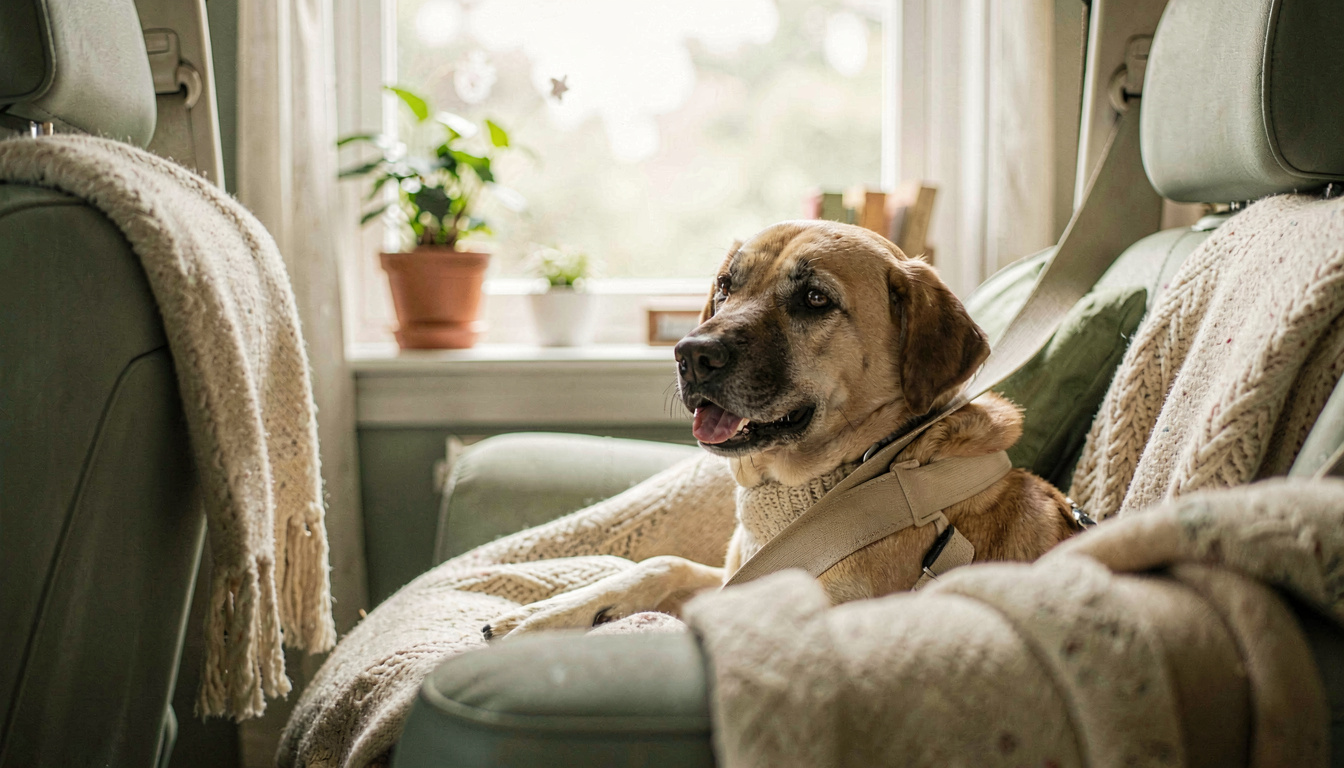
Disclosure: As an Amazon Associate I earn from qualifying purchases. This post may contain affiliate links at no extra cost to you.
You pull out the leash and your dog bolts for the door. But the moment she sees the car, her tail drops. She plants all four paws and refuses to budge.
That’s not stubbornness. That’s dread.
Maybe last time the vinyl seats were scorching hot. Maybe the curves in the road made her stomach lurch. Maybe she’s a German Shepherd with undiagnosed hip dysplasia and every pothole felt like a jab to her joints. Whatever the reason, your dog has learned: car equals discomfort.
The American Automobile Association reports that 84% of dog owners drive with their pets, yet only 16% use proper restraint. That’s a massive gap — and it’s why so many dogs hate car rides in the first place.
Cars aren’t built for dog bodies. But a few adjustments change everything.
| Problem | What It Looks Like | Immediate Fix |
|---|---|---|
| Motion sickness | Drooling, lip-licking, vomiting, whining | Face forward, crack window, ginger biscuit 30 min before |
| Overheating | Heavy panting, glassy eyes, bright red gums | Pre-cool car 10 min, sunshades on windows, cooling mat |
| Joint pain | Refusing to lie down, stiffness after exiting, whining on bumps | Orthopedic bed or thick crate pad on the seat, ramps for entry |
| Anxiety / fear | Trembling, panting, trying to escape, barking nonstop | Crate training familiarity, calming supplements, short practice trips |
What makes car rides uncomfortable for dogs?
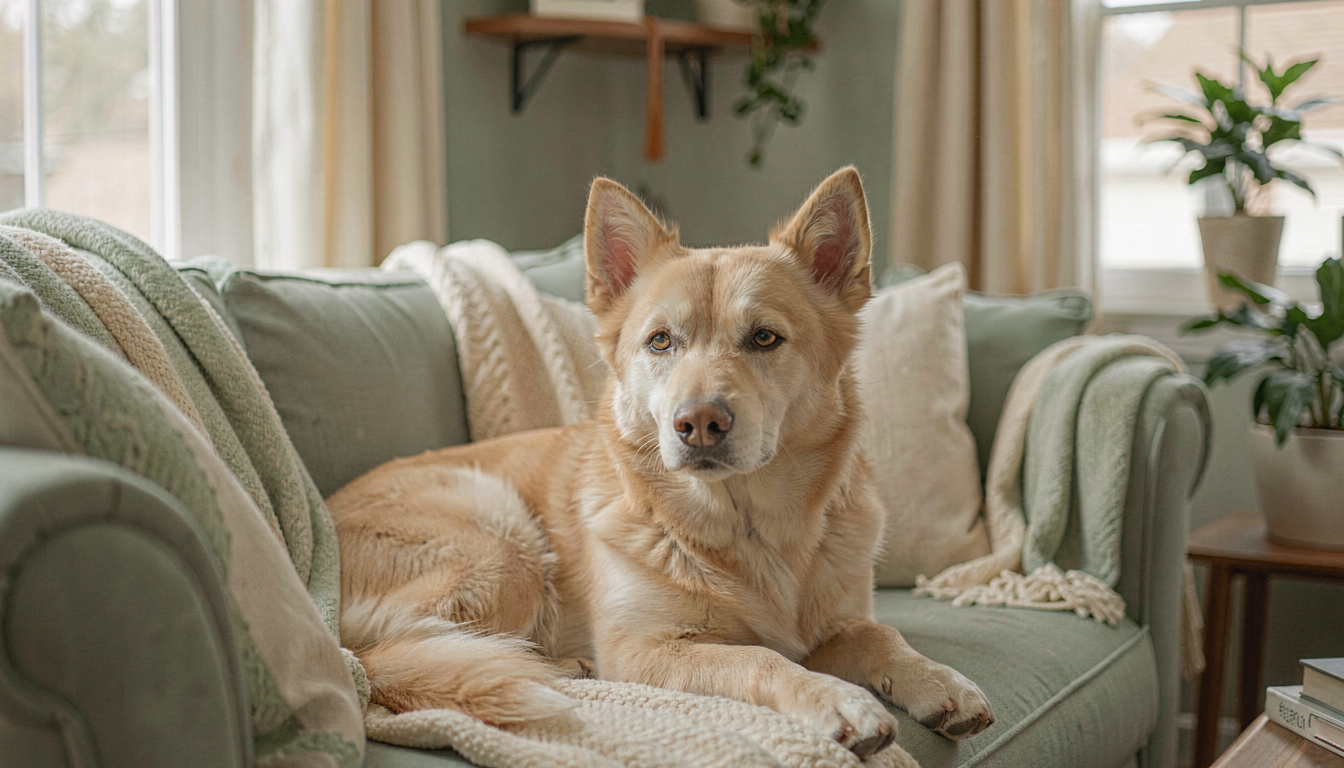
Most owners assume their dog just “doesn’t like the car.” But discomfort has a cause, and that cause is usually solvable.
Four things turn a car into a torture chamber for dogs. First: the floor vibrates at a frequency that amplifies through every joint. For a senior dog with arthritis, that vibration isn’t a minor annoyance — arthritis causes joint pain that the car’s steady hum keeps aggravating for the entire ride.
Second: a dog’s vestibular system didn’t evolve for 65 mph in a metal box. Their inner ear sends motion signals while their eyes see a stationary interior. That mismatch triggers motion sickness in roughly one-quarter of all dogs, with puppies under one year most affected.
Third: cars trap heat terrifyingly fast. On a 70°F day, the interior reaches 100°F within 20 minutes. Cracking windows drops that by maybe 3°F. If you’re comfortable, your double-coated dog might already be overheating.
Fourth: dogs lack context. They don’t understand why the world is rushing past. If their only car experiences end at the vet or groomer, they’ve been classically conditioned to dread the vehicle itself.
How does motion sickness affect dogs differently than humans?
Dogs experience motion sickness primarily through the vestibular system — and unlike humans, they can’t rationalize the sensation or request a break.
The signs are easy to miss if you’re driving. Lip-licking, yawning repeatedly, and excessive drooling are early indicators. These happen before the vomiting most owners wait for. Puppies are most susceptible because their inner ear structures haven’t fully matured. Most outgrow it by age one.
But here’s the thing: some dogs don’t outgrow it. They develop a conditioned response where the car itself triggers nausea before the engine even starts. Breaking that loop requires counter-conditioning — something most guides skip entirely.
Start with the car parked. Off. Feed your dog high-value treats near the vehicle for five minutes a day. Then inside, engine off. Then engine on, no movement. Then a 30-second drive down the block and right back home with a jackpot reward.
It works differently than Dramamine and is dosed specifically per pound, so don’t guess.
What’s the best way to restrain a dog during car rides?
A crash-tested harness or a secured crate is the only restraint that protects both your dog and everyone else in the vehicle.
Let’s get specific about that projectile-force number from the intro. The AAA crash-test analysis found that an 80-pound Labrador traveling at just 30 mph generates roughly 2,400 pounds of force in a sudden stop. That’s enough to launch a dog through a windshield — or into the back of your head.
Seat belt attachments that clip to a regular harness fail crash tests routinely. The Center for Pet Safety, the only organization conducting independent crash testing on pet restraints, has certified fewer than a dozen products. Look for their certification seal specifically.
“A harness that hasn’t been crash-tested is a false sense of security. In high-speed footage, we’ve seen straps snap, clips shatter, and harnesses slip right off on impact. Only a handful of products survive standardized sled testing with a crash-test dummy dog.”
For large breeds like Golden Retrievers and German Shepherds — both of whom are predisposed to hip dysplasia — a secured crate in the cargo area is often safer and more comfortable than a harness.
Hip dysplasia is common in German Shepherds, with the Orthopedic Foundation for Animals reporting over 20% of the breed shows evidence of the condition. A crate lets them lie flat on a memory foam pad rather than crouching awkwardly on a back seat.
Smaller dogs should ride in a crate secured by a seatbelt or cargo strap. Booster seats with built-in tethers work for dogs under 20 pounds, but only if the booster itself is belted in and the tether attaches to a properly fitted harness — never a collar.
How should I manage my dog’s temperature during car trips?
Pre-cool the car for 10 minutes before loading your dog, and use multiple cooling strategies simultaneously — one alone won’t cut it on a warm day.
The single biggest mistake owners make? Believing that air conditioning solves everything. It helps, but it’s not enough. Sun coming through windows hits your dog directly. The back cargo area of an SUV often gets poor airflow even with AC blasting.
Here’s what actually works.
Direct airflow matters. A small clip-on fan aimed at your dog’s crate or seat area keeps air moving across their body. Combine that with a cooling mat — the pressure-activated gel kind, not the ones you freeze solid. Frozen mats can cause cold burns on a dog’s belly.
Sunshades are non-negotiable. Put them on every window your dog is near, even if you have tinted glass.
Water access isn’t optional. A no-spill bowl clipped to the crate door or a bottle-style travel dispenser lets your dog drink whenever thirst hits. Dehydration accelerates overheating faster than anything else.
Breed matters enormously here. Brachycephalic breeds — Pugs, Bulldogs, Boxers — can overheat at much lower temperatures because their shortened airways can’t efficiently exchange heat through panting.
Double-coated breeds like Huskies and Malamutes insulate against heat as much as cold, which is why shaving them backfires. The coat traps cooler air against the skin. Remove it and you remove their temperature regulation.
Why do dogs with arthritis or hip dysplasia struggle with car rides?
Because a moving car transmits constant low-grade vibration through the body, and for a dog with compromised joints, that’s 30 minutes to 8 hours of continuous, unavoidable discomfort.
Think about the last time you sat on a plane in an uncomfortable seat. Now imagine your hips hurt every time you shift position, and you can’t stand up, and you don’t understand when it will end. That’s a dog with arthritis in a car.
Arthritis causes joint pain through inflammation and cartilage breakdown. Every bump, turn, and acceleration shift forces the dog to brace. Bracing requires muscle engagement. Sustained muscle engagement over a long trip leaves an arthritic dog stiff, sore, and exhausted upon arrival.
German Shepherds and Labrador Retrievers face similar odds. These are three of the most popular large breeds in America, which means millions of dogs are riding in pain that their owners don’t recognize.
Ramps are essential for larger seniors. Jumping into an SUV places peak impact forces through the hips and elbows. A folding ramp with a 15-18 degree incline eliminates that jarring entry.
Train your dog to use it at home first, on flat ground, with treats for every step before you ever set it up near the car.
Break frequency needs to increase for arthritic dogs. A young, healthy Labrador might be fine for a three-hour stretch.
A 10-year-old Golden Retriever with hip dysplasia needs a stop every 60-90 minutes to walk, stretch, and shift off the pressure points. That extra time adds up on long trips, but the alternative is a dog who can barely walk when you arrive.
How does separation anxiety affect car travel?

Separation anxiety doesn’t disappear in the car — for some dogs, it intensifies, because the confined space amplifies their distress at being separated from their primary attachment figure.
Wait — you’re in the car too. How is that separation?
Because the seating arrangement matters. A dog with separation anxiety who is crated in the cargo area while you’re up front may still perceive that distance as isolation. They can smell you but can’t reach you. Some dogs tolerate this fine. Others panic.
Separation anxiety treated by crate training relies on the crate becoming a safe den rather than a confinement tool. If you’ve done that work at home, the crate often becomes a comfort object that travels well.
The familiar smells, the bedding, the enclosed space — these are security cues that counteract the strangeness of a moving vehicle.
If your dog hasn’t been crate trained, a moving car is a terrible place to start.
For dogs with moderate anxiety, a Thundershirt or similar compression wrap can take the edge off. The constant gentle pressure has a physiologically calming effect — it’s the same principle as swaddling a baby.
Put it on 15 minutes before getting in the car so the association isn’t “car equals wrap equals something bad is coming.”
Calming supplements with L-theanine, casein peptides, or melatonin show modest but real effects for travel anxiety. They’re not sedatives. They don’t knock a dog out.
They just dial the volume down on the stress response by about 3-4 notches, which is often enough to turn a panicked trip into a manageable one.
What should a long-trip checklist include for dog comfort?
The difference between a dog who arrives relaxed and a dog who’s wrecked for the next two days often comes down to what you packed.
Here’s the pre-departure framework that covers the four big threats: motion sickness, heat, joint pain, and anxiety.
72 hours before:
- Wash your dog’s travel bedding so it smells like home, not last month’s mud
- If using calming supplements, start them 2-3 days prior — some take time to build in the system
- Confirm your route has stops every 2 hours (every 60-90 minutes for senior or arthritic dogs)
Morning of departure:
- Feed a light meal at least 3 hours before departure — a full stomach makes motion sickness worse
- Walk your dog for at least 20-30 minutes. A tired dog is a calmer passenger
- Pre-cool the car for 10 minutes before loading
- Apply sunshades to all windows near your dog’s position
- Fill the no-spill water bowl and secure it
What to pack:
- Crash-tested harness or secured crate with orthopedic bed or thick memory foam pad
- Cooling mat (pressure-activated, not frozen)
- No-spill water bowl
- 2-3 days of your dog’s regular food (switching food mid-trip causes digestive chaos)
- Familiar blanket or item that smells like home
- Calming aids: compression wrap, supplements, or vet-prescribed medication
- First aid basics: styptic powder, self-adhering wrap, tweezers for ticks
- Poop bags, enzyme cleaner, paper towels (someone will get carsick eventually)
- Current photo of your dog and a copy of vaccine records
During the trip:
- Stop every 2 hours minimum for a 10-15 minute walk and water break
- Never leave your dog unattended in a parked car, even with windows cracked, even for 5 minutes
- Offer water at every stop — dogs dehydrate faster in moving vehicles than sitting at home
- Watch for early motion sickness signs: repetitive lip-licking, heavy drooling, unusual stillness
“The most common travel-related emergency we see isn’t heatstroke or motion sickness — it’s dogs who ate something toxic at a rest stop.
Antifreeze, discarded food containing xylitol or raisins, and rodent bait are all concentrated along roadside areas where dogs sniff. Keep your dog on a short leash at stops and scan the ground before they do.”
When should I see a veterinarian about car travel problems?
If your dog vomits on every trip despite desensitization training, shows signs of severe panic that puts them at risk of injury, or exhibits pain behaviors for more than 24 hours after a long trip, it’s time for a veterinary consultation.
Some issues need more than an owner can provide. Motion sickness that doesn’t respond to ginger, breaks, or facing forward may require prescription antiemetics.
Dogs who vocalize, chew through restraints, or attempt to climb into the front seat are a genuine danger to everyone in the car — that’s not a training challenge, that’s a safety emergency.
For dogs with diagnosed arthritis or hip dysplasia, a veterinary physical therapist can design a pre-trip warm-up and post-trip recovery routine. Joint supplements like glucosamine and chondroitin take 4-6 weeks to show effects, so start them well before travel season.
Anxiety that escalates to self-injury — dogs who chew their own paws bloody or rub their faces raw against crate bars — is beyond the scope of calming supplements and compression wraps.
A veterinary behaviorist can prescribe anti-anxiety medication that makes travel possible without trauma. This isn’t “drugging your dog.” It’s providing medical relief for a medical condition.
Related Articles
- Orthopedic Dog Bed Buying Guide: What to Look For
- Best Cooling Dog Beds for Summer and Hot Climates
- Crate Training an Anxious Dog: A Step-by-Step Guide
- Hip Dysplasia in Dogs: Early Signs Every Owner Should Know
- Dog Car Safety: Crash-Tested Restraints That Actually Work
Frequently Asked Questions
Why does my dog pant excessively during car rides even when the AC is on?
Panting during car rides often signals anxiety or motion sickness rather than overheating. When a dog’s stress hormones spike, their respiratory rate increases even in a cool car.
Watch for other signs: trembling, whining, or drooling suggests anxiety; lip-licking and stillness suggests nausea. If the panting stops within minutes of exiting the car, temperature probably wasn’t the cause.
Can I use a regular dog bed in the car instead of an orthopedic one?
A regular dog bed compresses too much in a moving car to provide meaningful joint support. Orthopedic beds with at least 4 inches of high-density memory foam maintain their structure despite vibration.
For a dog with arthritis or hip dysplasia, this difference determines whether they exit the car stiff or mobile. A thick crate pad is a reasonable alternative if an orthopedic bed won’t fit.
How often should I stop on a road trip with a senior dog?
Senior dogs, especially those with arthritis or hip dysplasia, benefit from breaks every 60-90 minutes. Each stop should include a short walk to reset joint stiffness and an opportunity to drink water.
Young, healthy dogs can typically go 2-3 hours between stops. Adjust based on your dog’s behavior — if they seem restless or can’t settle, stop sooner.
Does covering the crate help with car anxiety?
Covering the crate with a lightweight, breathable cover can reduce visual overstimulation, which is a significant source of car anxiety for many dogs. The passing scenery, other vehicles, and shifting light patterns overwhelm some dogs.
A partial cover that blocks the side and rear windows while leaving the front open for airflow often helps. Test this on a short trip first — some dogs find a covered crate more claustrophobic, not less.
What’s the safest seating position for a dog in an SUV?
The cargo area with a secured crate is generally safest, as it places the dog behind the rear passenger seats and away from airbag deployment zones.
If using a harness, the back seat is safer than the front passenger seat where airbags can seriously injure a dog. Never allow a dog to ride in the front seat unrestrained or in the driver’s lap area — both are illegal in several states and deadly in a crash.
What This Gear Does Not Do Well
However, a fundamental tradeoff exists between safety and freedom of movement: restraints that prevent injury during sudden stops can restrict a dog’s ability to shift away from direct sunlight or pressure points, leading to overheating and muscle stiffness.
This limitation means no single product resolves the layered discomfort of car travel for dogs with physical conditions, as orthopedic supports often conflict with the secure anchoring required by harnesses.
Sources and Further Reading
The guidance in this article draws on published material from the following organizations:
- Pet safety in vehicles — American Veterinary Medical Association
- Warm weather pet safety — American Veterinary Medical Association
Last updated: August 31, 2026