Disclosure: As an Amazon Associate I earn from qualifying purchases. This post may contain affiliate links at no extra cost to you.
- Instant calm starts with a pressure wrap (like a Thundershirt) — it works in under 10 minutes for most dogs.
- White noise at 60–65 decibels masks sudden thunderclaps and firework bursts, cutting the startle reflex.
- A pre-prepared safe space — ideally a covered crate with a memory foam orthopedic bed — reduces stress before the noise even begins.
- If your dog has arthritis, hip dysplasia, or separation anxiety, pain and isolation amplify noise fear; target those conditions first.
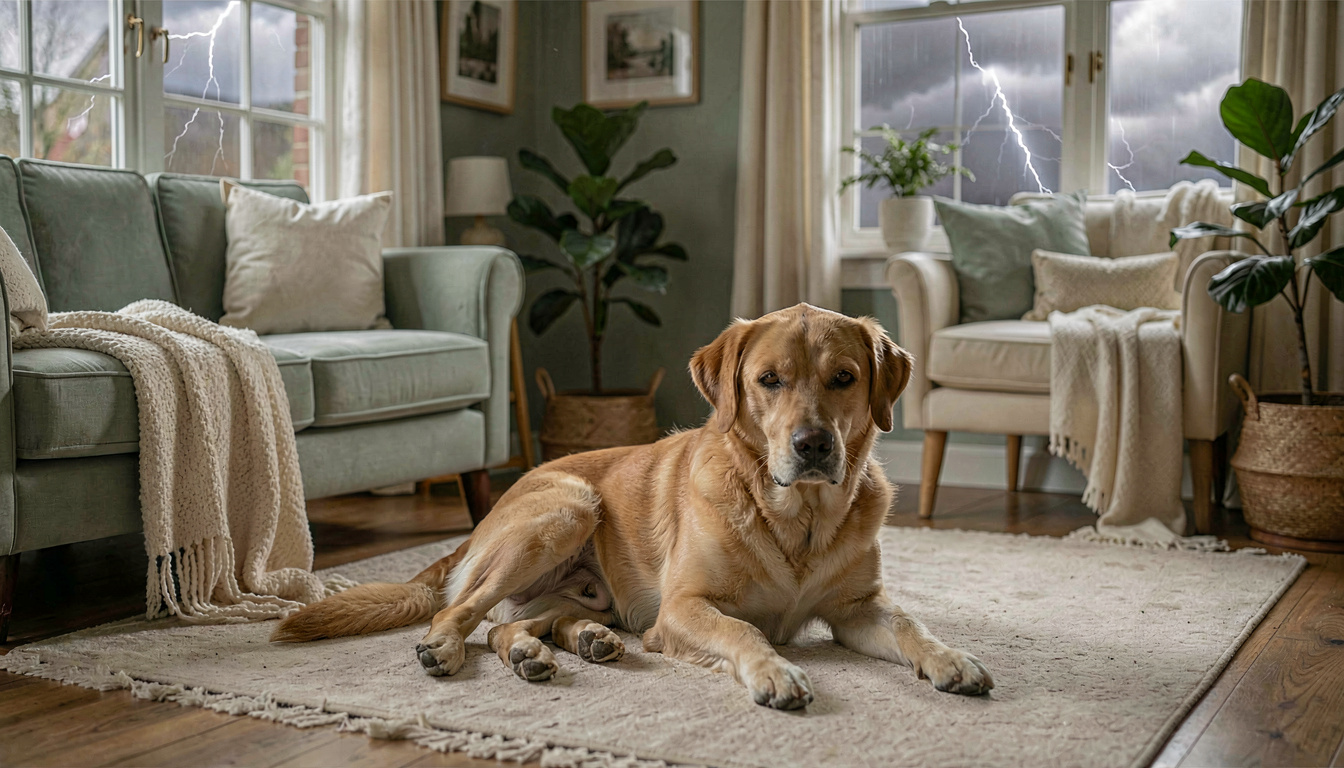
You hear the first rumble. Your dog starts panting, pacing, maybe even shaking. You’ve tried scolding, coddling, ignoring — nothing works. The real problem? Most owners treat the fear, not the underlying triggers.
And if your dog has joint pain from arthritis or hip dysplasia, the noise is only half the story. A dog that hurts interprets loud, unpredictable sounds as a threat it can’t escape. That’s why the fastest calming techniques target the nervous system, not just the ears.
This guide gives you a step-by-step plan to calm a dog down instantly during thunderstorms or fireworks — even if your dog is a senior German Shepherd with hip dysplasia or a Golden Retriever with separation anxiety.
You’ll learn exactly how to wrap, mask sound, build a safe space, and when to consider supplements. And you’ll see the one mistake most owners make that actually makes the phobia worse.
| Step | Time Needed | Materials | Estimated Cost |
|---|---|---|---|
| 1. Apply a pressure wrap | 2–10 minutes | Thundershirt or ace bandage | $30–$45 |
| 2. Set up white noise | Instant | White noise machine or app | $0–$40 |
| 3. Create a safe space | 5–15 minutes (prep in advance) | Crate, orthopedic bed, blanket | $50–$200+ (if buying new bed) |
| 4. Use calming supplements | 30–60 min before event | L-theanine, CBD, or vet-prescribed meds | $15–$50/month |
| 5. Start desensitization (long-term) | Weeks to months | Recorded storm sounds, treats | $0 |
How does arthritis affect a dog’s fear response during thunderstorms?
Arthritis causes joint pain that makes a dog’s stress response more intense and harder to shut off. When a dog is already aching, the sudden pressure change and loud noise of a storm trigger a fight-or-flight cascade that feels twice as overwhelming.
Board-certified veterinary behaviorists note that chronic pain lowers a dog’s tolerance for any additional stressor — and a thunderclap is a massive stressor.
Here’s the thing: a dog with arthritis isn’t just scared of the noise. The low-frequency vibrations of thunder travel through the floor and rattle painful joints.
That’s why a dog that normally settles on a soft bed may suddenly pace or refuse to lie down. The pain prevents the calm-down signal.
If your dog has arthritis, the first step is pain management. Untreated pain amplifies noise phobia. Talk to your vet about anti-inflammatory medication or joint supplements. Pair that with a supportive orthopedic bed, and you’ll see a calmer dog before you even reach for a pressure wrap.
Why is hip dysplasia a factor in storm anxiety?
Hip dysplasia is a structural defect that causes constant, low-grade discomfort, especially when a dog tries to settle in one position. The instability makes it painful to curl up, sprawl, or even shift weight — exactly what a scared dog instinctively does.
This is especially common in large breeds: Golden Retrievers, German Shepherds, and Labrador Retrievers all have a high genetic predisposition to hip dysplasia.
During a storm, a dog with hip dysplasia can’t find a comfortable position. The rising panic makes them circle, pant, and try to escape — but every movement tweaks the hip joint.
That’s a cycle that feeds the fear. That’s a lot of dogs who are physically unable to relax during a storm.
“Pain and noise reactivity are deeply intertwined. A dog with hip dysplasia hears a firework and immediately tenses — that muscle tension aggravates the joint, and the pain confirms the dog’s belief that the noise is dangerous.”
So how do you break the loop? An orthopedic bed relieves arthritis and hip dysplasia by keeping the hips aligned and supported. Look for memory foam at least 4 inches thick, with a dense foam base layer.
For a German Shepherd, a bed that’s too soft bottoms out and lets the hip joint twist. The right bed makes lying down a relief, not a chore.
How does separation anxiety make storms worse for dogs?
Separation anxiety means the dog is already in a state of hypervigilance when alone — add a thunderstorm and the panic multiplies. A dog that typically shreds the couch when you leave may become completely inconsolable during a storm if you’re not home.
Separation anxiety is one of the most common comorbidities with noise phobia.
Here’s where a lot of owners get it wrong: they think the dog is just scared of the storm. In reality, the dog is terrified of being alone AND threatened by the noise.
The two fears merge into one overwhelming event. That’s why leaving music on or a TV isn’t enough.
Create the safe zone before the storm. Leave the crate door open, place a familiar-smelling T-shirt inside, and add a lick mat with frozen peanut butter.
The goal is to make the crate the only place your dog wants to be. Crate training may ease separation anxiety by giving the dog a predictable, secure environment — and that same security blanket works during fireworks.
How can I instantly calm my dog with a pressure wrap?
A pressure wrap calms a dog in under 10 minutes by applying gentle, constant pressure to the torso — the same principle that calms a nervous human during a weighted blanket. The most popular commercial option is the Thundershirt, but you can also use a long ace bandage (be careful not to wrap too tight).
Why does it work? The pressure stimulates the vagus nerve, which triggers the parasympathetic “rest and digest” response. It’s a physiological hack. For a 60-pound dog, the wrap should feel like a firm hug — snug but not restrictive. You should be able to slip two fingers under the fabric.
For a homemade version, use a 4-inch wide elastic bandage. Start at the chest, crisscross over the shoulders, and finish with a gentle tie at the side — never over the spine.
Do a test run on a calm day and reward with treats so the dog associates the wrap with good things.
What white noise and sound masking techniques work best?
White noise at 60–65 decibels — roughly the volume of a normal conversation — can mask sudden thunderclaps and firework booms, dramatically reducing the startle reflex. The key is to fill the sound environment with a steady, predictable hum that makes the sudden spikes less jarring.
A white noise machine, a box fan, or even a specialized app like “Calm” or “White Noise Lite” will do the job.
Now here’s where it gets interesting: you don’t want to drown out the noise entirely.
If the dog can still hear faint thunder, the white noise acts as a buffer — the brain learns to disengage from the threat. Place the machine near the safe space, not directly next to the dog’s ears.
Combine white noise with a “sound blanket” — a thick comforter over the crate to further dampen noise and block flashing lights. For firework-heavy holidays, you can layer pink noise or brown noise, which have deeper frequencies that counteract the low boom of fireworks.
How to create a safe space that soothes an anxious dog
A safe space is a pre-prepared, den-like area that the dog can retreat to — and it should smell like you, feel physically supportive, and block visual stimuli. For a dog with arthritis or hip dysplasia, the foundation of that space is an orthopedic bed.
Memory foam at least 4 inches thick relieves arthritis by distributing weight evenly and keeping aching joints off the hard floor.
A covered crate is ideal. Throw a dark blanket over the top and sides, leaving the front open. Put a piece of your worn clothing inside. Add a lick mat or a stuffed Kong — the act of licking releases endorphins and naturally calms the dog.
For a Golden Retriever with hip dysplasia, the orthopedic bed inside the crate is non-negotiable; otherwise, the dog will avoid lying down, and the fear will escalate.
Don’t have a crate? A closet, a corner behind the sofa, or a pop-up tent can work. The goal is to make it cozy, dark, and quiet.
Introduce the space on calm days with treats and praise. You want the dog to think, “This is the best place in the world,” not “This is where I go when the world is ending.”
What calming supplements and medications can help?
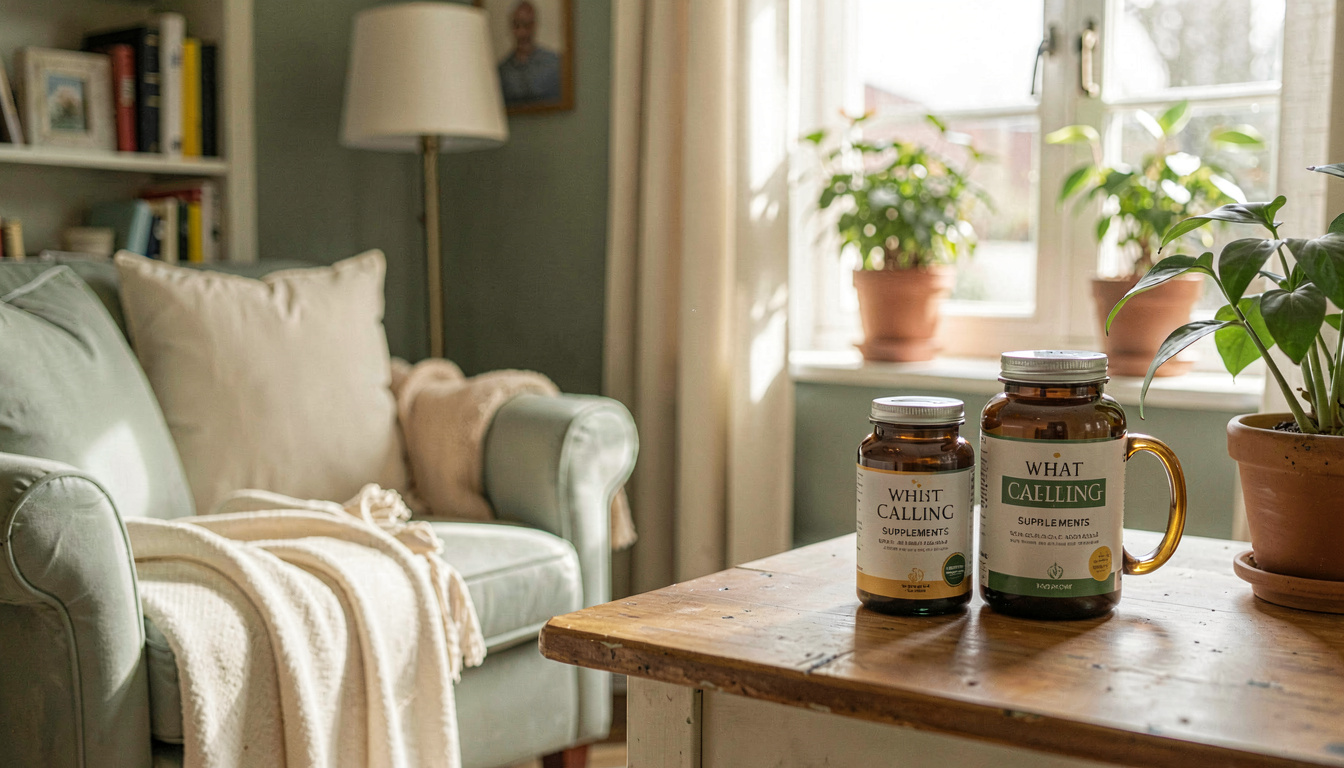
For immediate calm, L-theanine and CBD chews can reduce anxiety within 30–60 minutes, but they work best when combined with the behavioral techniques above. L-theanine is an amino acid that promotes relaxation without sedation.
CBD interacts with the endocannabinoid system to lower stress. However, always check with your vet first — especially if your dog takes pain medication for arthritis or hip dysplasia.
For severe cases, a board-certified veterinary behaviorist may prescribe short-acting anti-anxiety medication like trazodone or alprazolam. These are given 60–90 minutes before the storm.
The key is to use them judiciously — they are not a substitute for training. Medication alone, without behavior modification, often leads to rebound anxiety once the drug wears off.
How to gradually desensitize your dog to loud noises
Desensitization is the long-term solution — it reduces the fear at its root by pairing the scary sound with something positive. This is not an instant fix, but it’s the only way to permanently change the emotional response. You’ll need a recording of thunder or fireworks, a high-value treat, and patience.
Start at a volume so low your dog barely notices. Play the sound for 5 seconds, then immediately give a treat. Gradually increase the volume over weeks, but never to the point where the dog shows fear.
If the dog reacts, you’ve gone too fast. The goal is to rewire the brain: “that sound predicts chicken, not danger.”
For a dog with separation anxiety, practice this when you’re home first, then gradually introduce short absences. Combine with crate training and the orthopedic bed to create a multi-layer safety net. Hip dysplasia makes the process harder because the dog can’t relax physically, so manage pain alongside the training.
Common mistakes that make storm phobia worse
Most owners unintentionally reinforce the fear. Here are the top mistakes — and the one that’s almost impossible to spot.
1. Punishing the dog. Yelling “stop it!” or forcing the dog to face the noise only confirms the danger. The dog learns “when I’m scared, my human gets scary too.”
2. Over-coddling with a nervous voice. Saying “it’s okay, babyyyyy” in a high-pitched, worried tone tells the dog you’re also scared. That’s a signal to panic harder.
3. Ignoring underlying pain. A dog with undiagnosed arthritis or hip dysplasia will not respond to calming techniques alone. The pain must be addressed first. Joint pain turns a manageable fear into a full-blown phobia.
4. Using the crate as punishment. If the crate is only used during storms, the dog associates it with fear. Crate training must be a positive daily experience, not a storm-only jail.
5. Abandoning desensitization too early. Many owners quit after a week because they don’t see progress. Real desensitization takes 8–12 weeks. Stick with it — the payoff is a dog that sleeps through fireworks.
Expert insight on noise phobia and joint pain
“Pain and noise phobia are a feedback loop. A dog with arthritis interprets the vibration of thunder as a direct threat to its body. Until you address the pain, no amount of white noise will fully break the cycle.”
“Crate training is the single most effective environmental intervention for separation anxiety. When you combine a well-fitted crate with an orthopedic bed, you give the dog a physical and psychological anchor.”
Frequently Asked Questions
Why does my dog shake during thunderstorms?
Shaking is a classic sign of an acute stress response. The dog’s body releases adrenaline, and muscle tremors are the physical result. If the dog also has arthritis or hip dysplasia, the shaking can worsen joint pain, creating a vicious cycle.
How long does it take for a pressure wrap to work?
Most dogs show a reduction in pacing and panting within 5–10 minutes. The wrap works faster if applied before the dog reaches a full panic state. Pre-loading the wrap with a calm-day trial run helps the dog associate it with relaxation.
Can I use an orthopedic bed for an anxious dog?
Absolutely. An orthopedic bed with memory foam relieves arthritis and supports aching joints, which makes it easier for the dog to settle. A dog that is physically comfortable is far more likely to accept the safe space and white noise.
Is crate training safe for a dog with hip dysplasia?
Yes, as long as the crate is large enough for the dog to stand, turn around, and stretch out without twisting the hips. Line the crate with a thick memory foam orthopedic bed to prevent pressure sores and keep the hips aligned.
When should I see a vet for storm anxiety?
If your dog injures themselves trying to escape, or if shaking, panting, and drooling persist for more than an hour after the storm, consult a vet. Dogs with undiagnosed arthritis or hip dysplasia often need pain management alongside anxiety treatment.
Related Articles
- Best Orthopedic Dog Beds for Arthritis and Hip Dysplasia
- How to Crate Train a Dog with Separation Anxiety
- A Vet’s Guide to Calming Supplements for Dogs
Sources and Further Reading
The guidance in this article draws on published material from the following organizations:
- Pet safety in vehicles — American Veterinary Medical Association
Last updated: September 02, 2026