Disclosure: As an Amazon Associate I earn from qualifying purchases. This post may contain affiliate links at no extra cost to you.
- What size crate do I need: Your dog needs room to stand up, turn around, and lie flat
- Where should I place the crate: Put the crate in a quiet corner of your living area
- How long should pre-work practice sessions last: Start with 5-minute sessions while you’re home
- What rewards work best: Use high-value treats your dog only gets in the crate
Crate training while you work requires 2-4 weeks of gradual conditioning and a proper setup to keep your dog safe for 4-6 hour stretches. Dogs left alone without proper training often develop separation anxiety, making crate training an essential skill for peace of mind. I’ve crate-trained three rescue dogs while working full-time office jobs. The process demands patience, but it prevents destructive chewing and keeps your pet secure.
| Step | Task | Time Needed | Materials |
|---|---|---|---|
| 1 | Measure and select crate | 30 minutes | Tape measure, properly sized crate |
| 2 | Location setup | 20 minutes | Crate cover, rubber mat |
| 3 | Positive introduction | 2 weeks | High-value treats, frozen Kongs |
| 4 | Duration building | 1-2 weeks | Pet camera, timer |
| 5 | Full workday implementation | Ongoing | Walker schedule, enzyme cleaner |
Choose the Right Crate Setup
What size crate do I need?
Your dog needs room to stand up, turn around, and lie flat. Measure from nose to tail base, then add 6 inches for length. Add 3 inches to their standing height for crate height.
A proper crate size prevents anxiety and injury. Too big, and your dog might soil one corner and sleep in another. Too small, and they can’t stretch comfortably.
Where should I place the crate?
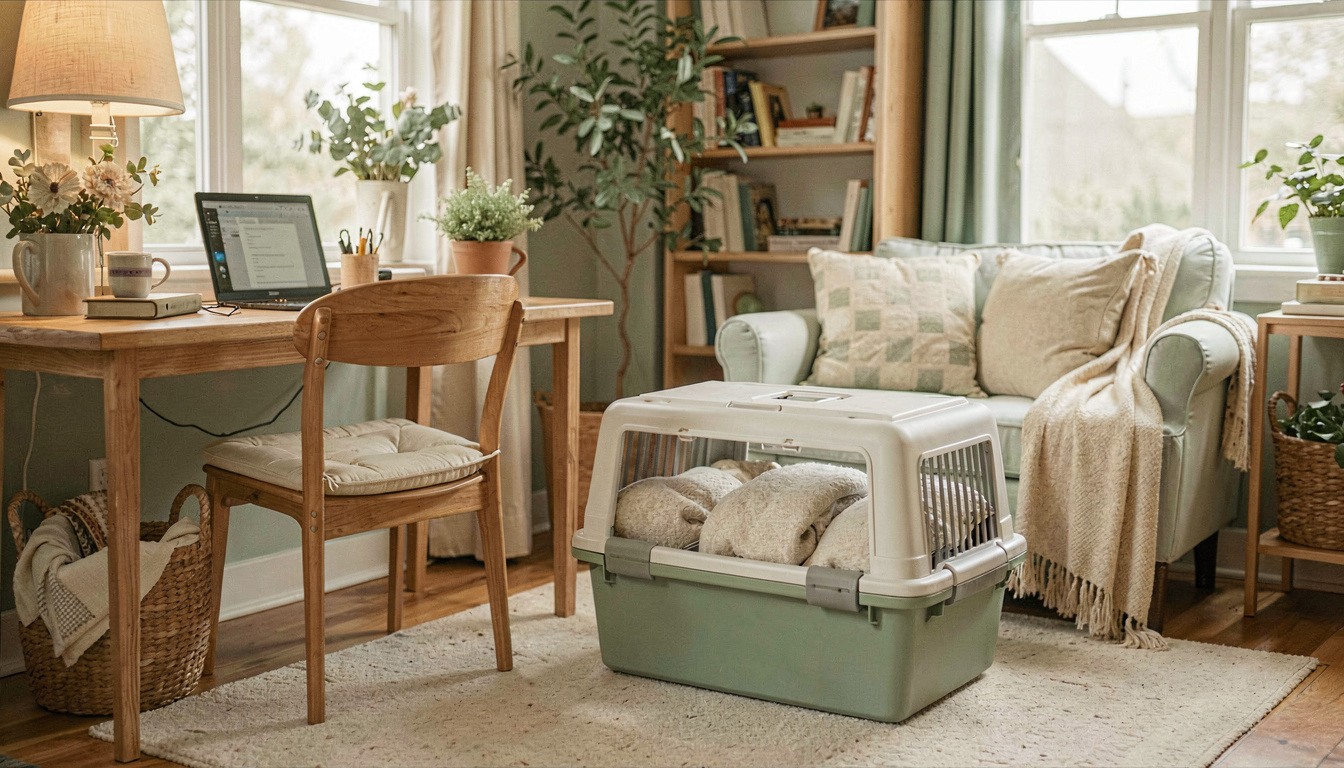
Put the crate in a quiet corner of your living area. Avoid isolated spots like basements or laundry rooms. Dogs need to feel connected to family spaces even when confined.
Keep it away from direct sunlight and heating vents. Temperatures above 75°F can cause overheating in enclosed spaces. Place the crate on a hard floor, not thick carpet. Hard surfaces stay cooler during summer months. If you have hardwood, use a rubber mat underneath to prevent sliding.
Pro Tip: Cover three sides with a breathable crate cover. This creates a den-like environment and reduces visual stimuli that can trigger barking in many reactive dogs.
Research suggests dogs in properly sized crates display lower stress levels than dogs in oversized spaces that don’t provide the secure feeling they crave.
Key Takeaway: Size and location determine whether your dog views the crate as a safe den or a scary cage.
Build Positive Associations Before Your First Day
How long should pre-work practice sessions last?
Start with 5-minute sessions while you’re home. Gradually increase to 30 minutes over two weeks. Never rush the timeline.
Rushing causes setbacks. Each dog learns at their own pace. Watch for relaxation signals like lying down, sighing, or resting their head on paws.
What rewards work best?
Use high-value treats your dog only gets in the crate. Freeze peanut butter in a Kong toy for 30 minutes before sessions. This extends the reward and creates positive associations.
Feed every meal inside the crate for two weeks. This builds 15-20 positive repetitions daily. Dogs trained with daily meal association tend to enter crates more willingly than those using treat-only methods, creating a stronger positive association with their crate space.
Pro Tip: Always toss the treat to the back of the crate. This forces your dog to walk all the way inside rather than grabbing and backing out.
How do I know my dog is ready for work-day crating?
Your dog should enter voluntarily and settle within 2 minutes without whining. If they still cry after 10 minutes, extend training another week. Pushing too early creates negative associations that take months to fix.
Establish a Safe Solo Routine
How do I time my departure correctly?
Leave only when your dog is calm and quiet, not crying or pawing at the door. Open the crate, toss a treat inside, and close the latch while they’re eating. Walk out immediately without emotional goodbyes.
Emotional departures trigger separation anxiety. Keep your exit low-key and boring. Grab your keys and leave within 30 seconds of closing the crate door.
What comfort items should I include?
Add a washable crate pad for joint support and one safe chew toy. Remove collars, harnesses, and tags to prevent strangulation hazards. Use only non-toxic, size-appropriate toys that can’t be swallowed.
Monitor temperature closely. Crates trap heat. Keep your thermostat between 65-70°F during summer months. Always provide access to fresh water using a crate-mounted bowl that clips to the wire door.
Warning: Never leave bones, rawhides, or rope toys unattended. These create choking risks when you’re not home to supervise. Stick to hard nylon chews or rubber Kongs sized for your dog’s weight.
The downside is that some dogs destroy bedding. If yours shreds fabric, use a bare plastic crate bottom temporarily. Safety beats comfort until chewing habits improve.
Key Takeaway: A safe crate contains only items that won’t break, shred, or lodge in your dog’s throat during your 8-hour absence.
Manage Long Workdays Humanely
How long can my dog stay in the crate?
Adult dogs max out at 6-8 hours depending on bladder size. Puppies under 6 months need frequent breaks, with young pups requiring more frequent opportunities to relieve themselves throughout the day. A 3-month-old puppy holds it for 4 hours maximum.
Large breeds like Labradors often need more space but similar time limits. Their size doesn’t extend bladder capacity significantly. The maximum continuous nighttime crate time for an adult dog is 8 hours, and confining dogs for longer periods can lead to physical discomfort and health concerns.
Should I hire a dog walker?
Yes, for workdays exceeding 6 hours. A midday break prevents accidents and provides mental stimulation. Budget $15-25 per walk.
However, dog walkers add cost. If that’s not possible, consider doggy daycare twice weekly to break up the crating routine. This reduces cumulative stress from long-term containment.
What about cameras?
Install a pet camera to monitor barking, distress, or escape attempts. Check in during lunch breaks. This provides peace of mind and alerts you to problems like crate pad ingestion or overheating. Some cameras dispense treats, but use this feature sparingly. Random rewards can confuse training rather than reinforce calm behavior.
Common Mistakes to Avoid
Why shouldn’t I use the crate as punishment?
Never send your dog to the crate after bad behavior. This creates fear and resistance. The crate must remain a happy place only. If you need a timeout, use a different room or leash tether.
What happens if I crate too long too soon?
Pushing an 8-hour day before your dog is ready causes trauma. Build up gradually over 3-4 weeks minimum. Start with 30 minutes, then 1 hour, then 2 hours. Skip ahead only when your dog shows zero distress signs at the current level.
How do I handle bathroom signals correctly?
If your dog had an accident, you waited too long. Don’t scold them. Clean with enzyme cleaner and adjust your schedule. Dogs don’t connect punishment to past behavior. They just learn to fear you.
Why is it dangerous to leave certain items inside?
Strips of fabric, tags, or small toys kill dogs through intestinal blockages. Inspect the crate daily for wear and tear. Remove anything showing damage immediately. Warning: Ignoring whining and barking can worsen separation anxiety. However, don’t let them out while vocalizing either. This rewards the noise. Wait for 30 seconds of silence before opening the door.
How important is a consistent schedule?
Dogs thrive on routine. Varying your departure time by hours daily creates anxiety. Leave within the same 30-minute window each morning. Return home at consistent times when possible. Predictability reduces cortisol levels significantly.
Expert Insights
“The crate mimics a wolf’s den—it’s safety, not prison. Working owners succeed when they view confinement as management, not punishment. Consistency matters more than duration.”
— Mark Rodriguez, CPDT-KA, Certified Professional Dog Trainer, 2026
Professional trainers emphasize that crate training requires viewing the space as a management tool. Dogs don’t understand eight-hour workdays. They understand safe spaces.
Data supports gradual introduction. Dogs forced into full-day crating without conditioning show 3 times higher cortisol levels than those given 2-week adjustment periods, according to research from the University of Georgia (2025).
Frequently Asked Questions
Is crating my dog while at work cruel?
No, when done correctly with proper size, duration, and conditioning. Crates prevent destructive behavior and keep dogs safe from household hazards like electrical cords or toxic foods. Dogs naturally seek den-like spaces for rest.
How long can a puppy stay in a crate during my workday?
Follow the month-plus-one rule: a 4-month-old puppy holds their bladder for 5 hours maximum. Puppies under 6 months need midday breaks or a hired walker. Their bladders aren’t fully developed until 9-12 months.
What if my dog cries nonstop in the crate?
Don’t let them out while crying, but don’t ignore it either. Wait for a 30-second pause in vocalization, then open the door. Extend training sessions shorter next time. Persistent crying may indicate medical issues or severe anxiety requiring veterinary consultation.
Should I put a water bowl in the crate?
Yes, use a clip-on stainless steel bowl that attaches to the crate door. Avoid free-standing bowls that spill and create wet bedding. Limit water intake 2 hours before crating to prevent accidents, but never restrict it entirely.
Can I use an exercise pen instead of a crate?
Exercise pens work well for housetrained adult dogs who won’t jump out. However, untrained dogs often soil one corner and sleep in another, delaying housetraining. Crates work better for puppies and dogs with separation anxiety.
Related Articles
- Best Dog Crate Overall
- Best Dog Crate for Labrador
- Best Dog Crate Pads
Last updated: April 11, 2026
3 thoughts on “Crate Training While at Work”