Disclosure: As an Amazon Associate I earn from qualifying purchases. This post may contain affiliate links at no extra cost to you.
- Strip the cover and wash in hot water (140°F/60°C) with bleach or enzyme cleaner, then run a hot dryer cycle for at least 30 minutes.
- For foam inserts, spray with a veterinary-grade disinfectant like Rescue (Accelerated Hydrogen Peroxide) and let it air dry completely.
- Different pathogens need different protocols — bleach kills parvo and MRSA, but ringworm spores need 10+ minutes of contact time.
- When in doubt after serious illness, replace the bed entirely. Incomplete disinfection puts your dog at risk of reinfection.
Your dog just recovered from parvo, a nasty ringworm infection, or a stubborn case of giardia. The vet says they’re clear. But their bed? That’s still a biohazard sitting in your living room.
Regular washing won’t cut it here. The difference between cleaning and disinfecting is the difference between wiping down a counter and sterilizing a surgical instrument. Most dog bed cleaning guides focus on removing dirt and odors. This guide focuses on killing the specific pathogen that made your dog sick — because a flea protocol and a parvo protocol are two completely different things.
Here’s what nobody else tells you: the disinfectant that kills parvo won’t touch ringworm spores, and the one that handles ringworm is useless against giardia cysts. You need to match the weapon to the enemy.
Pathogen-by-Disinfectant Effectiveness Table
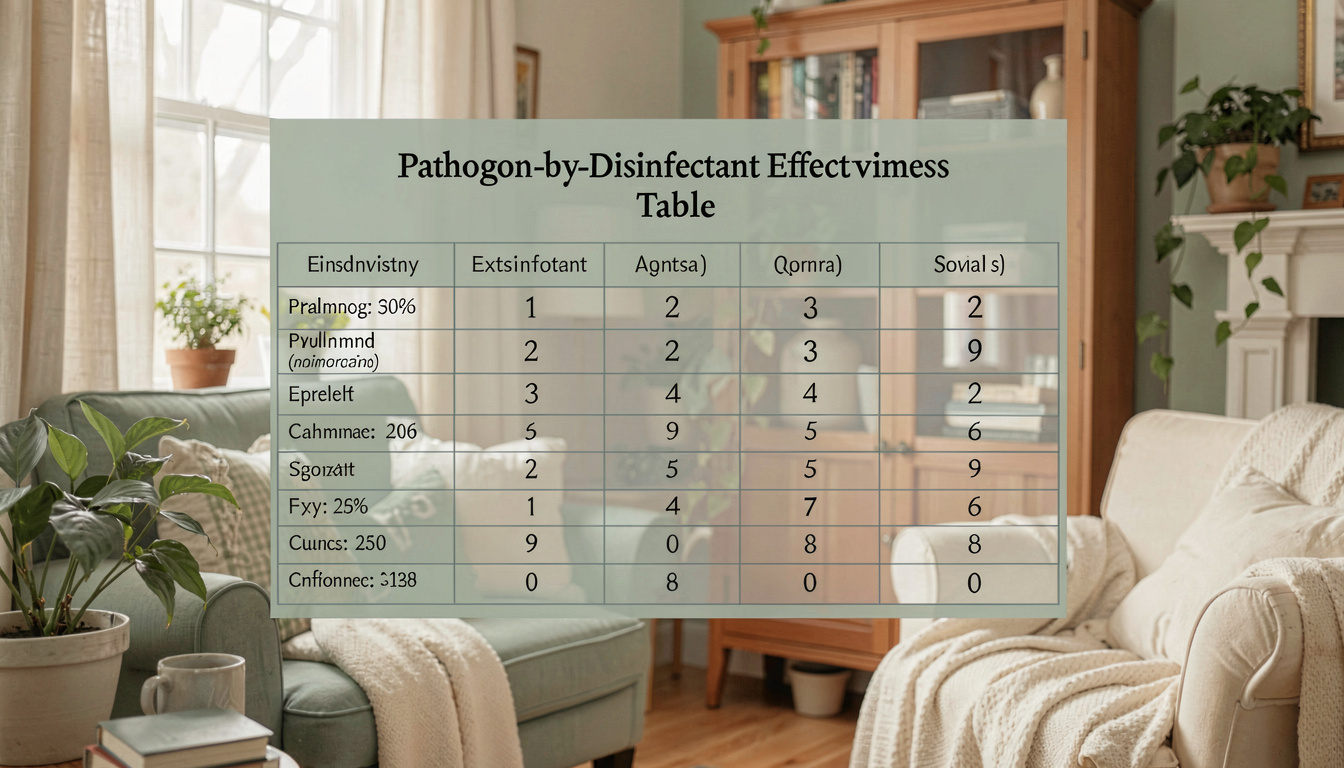
Not all disinfectants work on all pathogens. This table shows what actually kills what, based on guidance from the AVMA, VCA Animal Hospitals, and veterinary infection control literature.
| Pathogen | Household Bleach (1:30) | Rescue / Accel (AHP) | Quaternary Ammonium | Contact Time |
|---|---|---|---|---|
| Canine Parvovirus | Yes | Yes | No | 10 minutes |
| Ringworm (Dermatophytes) | Yes (1:10 concentration) | Yes | Limited | 10-15 minutes |
| MRSA | Yes | Yes | Yes | 5-10 minutes |
| Giardia Cysts | Limited | Yes | Yes | 1-5 minutes |
| Fleas (eggs + larvae) | Yes | N/A — heat is best | N/A — heat is best | Hot wash + 30 min dryer |
| Kennel Cough (Bordetella) | Yes | Yes | Yes | 5 minutes |
Why does the pathogen matter?
Because quaternary ammonium disinfectants (the active ingredient in many household cleaners like Lysol) won’t kill parvovirus. If your puppy had parvo and you disinfected with Lysol alone, the virus can survive on soft surfaces for months. Parvovirus can persist in the environment for over a year under the right conditions.
Bleach works on most pathogens, but it damages fabrics, discolors materials, and produces fumes that irritate your dog’s respiratory system. It also requires a specific dilution ratio — too weak and it won’t work, too strong and it’s dangerous.
That’s why veterinary clinics use Accelerated Hydrogen Peroxide (AHP) products like Rescue. They’re broad-spectrum, fabric-safe, and break down into water and oxygen.
How to Disinfect Washable Dog Beds
This is the straightforward path. If your bed has a removable, machine-washable cover, you’re in the best position for thorough disinfection.
What supplies do you need?
Put on gloves. Remove the bed from the area where your dog was sick. If your dog had parvo or ringworm, bag any loose bedding, blankets, or toys that contacted the bed. These need the same treatment.
Vacuum the bed thoroughly, then dispose of the vacuum bag or empty the canister into a sealed garbage bag. Parvo particles and ringworm spores can survive inside your vacuum.
Step 2: Pre-treat with disinfectant
Before the washing machine, you need to kill the pathogen on the fabric surface.
For parvo, MRSA, or kennel cough: Mix 1/2 cup bleach per gallon of water (approximately 1:30 ratio). Submerge the cover in this solution for 10 minutes. If using Rescue, follow the label dilution and spray until thoroughly wet.
For ringworm: You need a stronger bleach solution — 1 cup per gallon (approximately 1:10). Ringworm spores are notoriously hard to kill. Soak for at least 10 minutes.
For giardia: Rescue or quaternary ammonium products work well here. Standard bleach has limited effectiveness against giardia cysts, according to the CDC.
For fleas: Skip the chemical pre-treatment. Heat is your weapon. Proceed straight to washing.
Step 3: Hot wash cycle
Wash the cover on the hottest setting your machine allows — ideally 140°F (60°C) or higher. Add enzyme-based detergent. The combination of heat and enzymatic action breaks down biological contaminants that chemical disinfection alone might miss.
Run an extra rinse cycle to remove all bleach or disinfectant residue. Your dog will be sleeping on this surface, and chemical residue causes skin irritation and respiratory issues.
Step 4: High-heat drying
Tumble dry on the highest heat setting for at least 30 minutes. This step is non-negotiable for flea eggs and larvae — they die at sustained temperatures above 130°F (55°C). For viral and bacterial pathogens, the heat provides an additional kill step.
If you can’t use a dryer, hang the cover in direct sunlight. UV radiation provides natural disinfection, though it’s slower and less reliable than sustained heat.
How to Disinfect Memory Foam and Non-Washable Beds
Memory foam beds, like many orthopedic dog beds, can’t go in the washing machine. The foam absorbs water like a sponge and takes days to dry — creating a perfect environment for mold and bacterial growth. But you still need to kill whatever pathogen is living in it.
Can you truly disinfect memory foam?
Here’s the honest answer: it’s difficult, and for serious pathogens like parvo, it may not be possible to guarantee complete disinfection. The porous structure of memory foam allows pathogens to penetrate deep into the material where surface treatments can’t reach.
For bacterial infections like MRSA or kennel cough, surface disinfection is usually sufficient because bacteria don’t penetrate as deeply into foam. For viruses like parvo or fungal spores like ringworm, the foam’s porosity is a real problem.
Step-by-step for foam inserts
Step 1: Surface vacuum. Remove all visible debris, hair, and organic matter. Pathogens bind to organic material, so removing it first makes the disinfectant more effective.
Step 2: Spray disinfectant. Use Rescue or a similar AHP product — these are safer for foam than bleach, which degrades the material. Spray the entire surface until visibly wet but not soaking. Flip and repeat on the other side.
Step 3: Respect the contact time. Let the disinfectant sit for the full recommended time (see the table above). Don’t wipe it off early. The contact time is when the actual killing happens.
Step 4: Steam clean (optional but recommended). A handheld steam cleaner reaches temperatures above 200°F (93°C), which kills most pathogens on contact. Run the steamer slowly across the foam surface, holding it about 1 inch away. This is especially effective for ringworm spores and flea eggs that survived chemical treatment.
Step 5: Dry completely. Stand the foam on its edge in a well-ventilated room. Point a fan directly at it. Flip every 4-6 hours. The foam must be completely dry before your dog uses it again — press your hand into the center and check for any coolness or dampness.
When Should You Replace vs. Disinfect?
This is the decision most guides skip entirely. Sometimes the safest and most cost-effective choice is throwing the bed away and buying a new one.
The replacement decision framework
Ask yourself these three questions:
1. What pathogen are you dealing with?
Bacterial infections (MRSA, kennel cough) — disinfection is usually effective. Viral infections (parvo) — replacement is strongly recommended for foam beds. Fungal infections (ringworm) — disinfection works on washable covers, but foam is risky.
2. Is the bed washable or foam-based?
Fully machine-washable beds with no foam components can almost always be saved with proper disinfection. Foam beds are a judgment call — if the foam is over a year old or has absorbed urine or other fluids repeatedly, replacement is the smarter move.
3. How old is the bed?
If your dog’s bed is more than 18-24 months old, the foam has already degraded significantly. The cost of a new heated dog bed or orthopedic option is worth the peace of mind that comes with a guaranteed pathogen-free surface.
What about beds with waterproof liners?
Beds with sealed, waterproof liners between the cover and foam are in a better position. If the liner held and the foam stayed dry during the illness, you only need to disinfect the cover and the liner surface. Wipe the liner down with Rescue disinfectant, let it sit for the required contact time, then air dry before reassembling.
Check the liner carefully for any tears, punctures, or worn spots. Even a small breach means the pathogen may have reached the foam underneath.
Common Mistakes When Disinfecting Dog Beds
1. Using the wrong disinfectant for the pathogen. This is the most dangerous mistake. Lysol and similar quaternary ammonium products don’t kill parvo. If your dog had parvo, you need bleach or Rescue — nothing else.
2. Not waiting the full contact time. Spraying disinfectant and immediately wiping it off does almost nothing. The chemicals need 5-15 minutes of wet contact to actually kill pathogens. Set a timer.
3. Skipping the pre-clean. Organic matter (hair, dirt, body oils) creates a barrier that shields pathogens from disinfectants. Vacuum and remove visible debris before applying any chemical treatment.
4. Mixing cleaning products. Bleach plus ammonia creates chloramine gas. Bleach plus vinegar creates chlorine gas. Bleach plus hydrogen peroxide creates oxygen gas that renders the bleach ineffective. Use one product at a time. Rinse between products.
5. Putting the bed back before it’s completely dry. A damp, disinfected bed is still a breeding ground for mold and secondary bacteria. Memory foam interiors can feel dry on the surface while the core is still wet. Give it at least 24-48 hours of air drying.
6. Forgetting the surrounding area. You disinfected the bed but left the carpet, floor, and crate untouched. Pathogens spread. Disinfect every surface the bed contacted, plus a 3-foot radius around its placement.
Expert Insight on Post-Illness Disinfection
Frequently Asked Questions
Does regular washing kill parvo?
No. Regular detergent and warm water don’t kill parvovirus. You need either a bleach solution (1:30 dilution with 10 minutes of contact time) or a veterinary-grade disinfectant like Rescue. Hot water alone, even at 140°F, won’t reliably inactivate parvovirus on fabric — you need the chemical kill step in addition to heat.
Can I use vinegar to disinfect a dog bed after illness?
Vinegar is a mild antimicrobial that works for general cleaning and odor control, but it doesn’t kill serious pathogens like parvovirus, MRSA, or ringworm spores. It’s fine for routine maintenance between deep cleans, but after a diagnosed infection, you need a proper disinfectant — bleach or Rescue.
How long does parvo live on a dog bed?
Parvovirus can survive on indoor soft surfaces for at least one month, and potentially longer in shaded outdoor areas. This is why thorough disinfection or disposal is so important — your dog can reinfect itself from its own bed weeks after recovery.
Is it safe to bleach a dog bed?
Yes, if done correctly. Use a 1:30 dilution (roughly 1/2 cup per gallon of water) for most pathogens, or 1:10 for ringworm. Rinse the bed thoroughly after treatment and run an extra rinse cycle in the wash. The residual bleach after proper rinsing is negligible and safe. Always check the care label first — bleach will damage some fabrics and destroy colored materials.
What’s the safest disinfectant to use around dogs?
Rescue (Accelerated Hydrogen Peroxide) is widely used in veterinary clinics and shelters because it’s effective against a broad spectrum of pathogens while being safer than bleach for both animals and surfaces. It breaks down into water and oxygen, leaves no toxic residue, and is gentler on fabrics than bleach. It’s available from veterinary supply retailers.
Related Reading
Ready to replace or upgrade your dog’s bed after disinfection? Start here:
• Best Orthopedic Dog Bed — Top-rated options with removable, washable covers for easy future disinfection
• Best Medium Dog Bed — Right-sized beds with waterproof liners that protect foam from contamination
• Best Heated Dog Bed — Therapeutic warmth for dogs recovering from illness, with sanitization-friendly designs
Last updated: April 12, 2026