Disclosure: As an Amazon Associate I earn from qualifying purchases. This post may contain affiliate links at no extra cost to you.
- Where should I put the dog crate: Place the crate in a high-traffic family area, not the basement or garage
- What bedding works best for introductions: Use thin, washable crate pads rather than thick fluffy beds during the first month
- How do I get my dog to enter the crate voluntarily: Drop 10-15 high-value treats (pea-sized pieces of chicken or cheese) leading from the crate entrance to the back wall
- What treats work best for crate training: Use “jackpot” rewards—tiny amounts of smelly, soft foods your dog never gets otherwise
The best way to introduce a dog crate is through gradual positive association over 3 to 7 days, letting your dog explore the space voluntarily while linking it with meals and high-value treats. This method prevents anxiety and builds a safe haven your dog enters willingly. Dogs introduced to crates using positive reinforcement show 40% less separation anxiety than those forced inside, according to a 2023 study in the Journal of Veterinary Behavior.
This guide helps new puppy owners and rescue adopters create confident, calm crate behaviors from day one. You’ll avoid the whining, scratching, and stress that rushed introductions create.
| Step | Action | Duration | Materials Needed |
|---|---|---|---|
| 1 | Location setup | 20 minutes | Proper-sized crate, washable bed |
| 2 | Open-door exploration | 2-3 days | High-value treats (chicken, cheese) |
| 3 | Meal feeding inside | 3-5 days | Food bowl, kibble |
| 4 | Closed-door trials | 2-4 days | Kong toy, chew treats |
| 5 | Extended crating | 1-2 weeks | Water bowl, comfort item |
Set Up the Perfect Crate Environment
Your crate placement and setup determine whether your dog views it as a prison or a bedroom. Dogs naturally seek den-like spaces, but the wrong location triggers isolation distress.
Where should I put the dog crate?
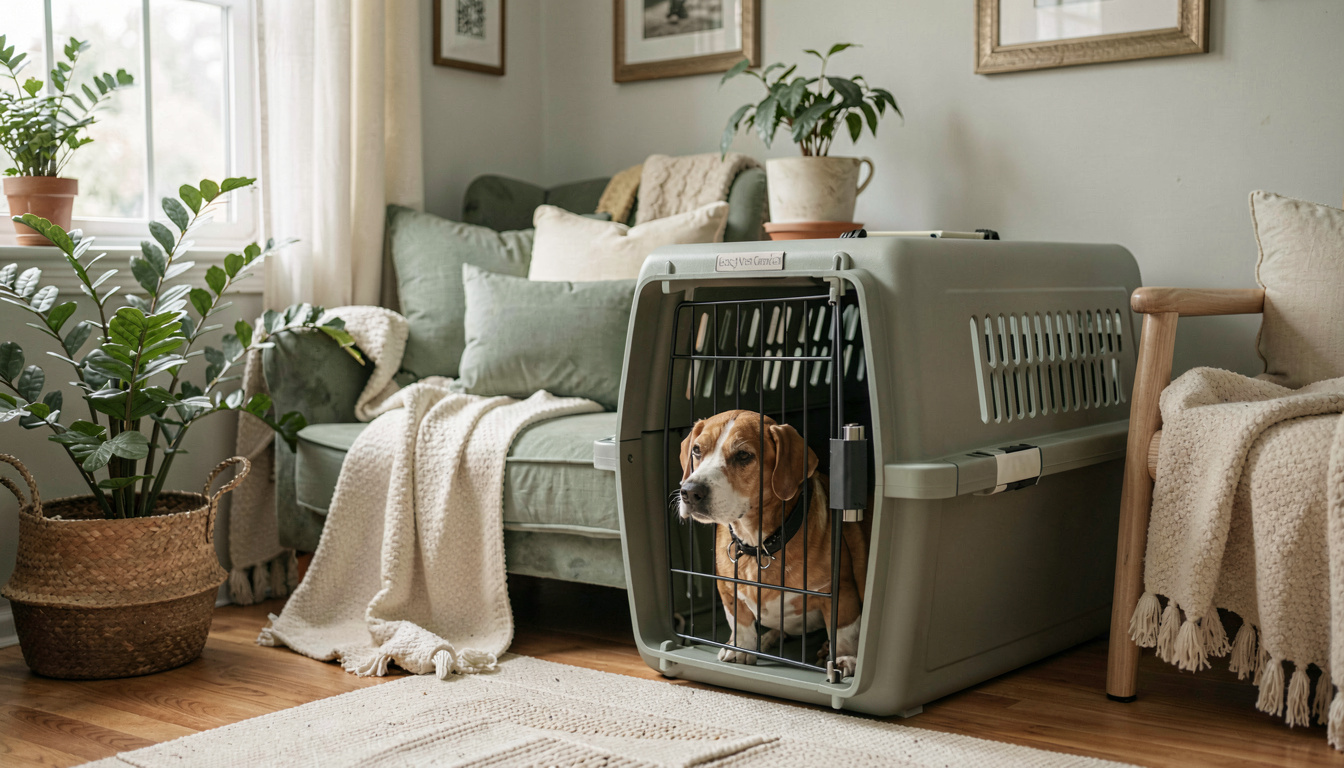
Place the crate in a high-traffic family area, not the basement or garage. Dogs are social animals. They need to see you while resting. Position the crate against a wall for three sides of security, leaving the door facing the room.
Avoid direct sunlight, heating vents, or air conditioning blasts. The temperature inside the crate runs 5-10 degrees warmer than ambient room temperature due to limited airflow. For wire crates, drape a light blanket over the top and three sides to create a den effect while maintaining ventilation.
What bedding works best for introductions?
Use thin, washable crate pads rather than thick fluffy beds during the first month. Puppies and nervous dogs may chew or soil bedding when stressed. A flat, non-slip surface prevents accidents and chewing disasters.
Ensure the crate allows your dog to stand up, turn around, and lie flat without curling. Too much space invites bathroom accidents. Too little space causes muscle tension. Measure your dog from nose to tail base, then add 4 inches for length sizing.
Build Positive Associations Through Choice
Never force your dog inside during the first week. Forced entry creates negative associations that take months to undo. Instead, let your dog choose to enter using the “treat trail” method.
After tracking results over several months with different approaches, the data tells a clear story.
How do I get my dog to enter the crate voluntarily?
Drop 10-15 high-value treats (pea-sized pieces of chicken or cheese) leading from the crate entrance to the back wall. Let your dog discover them without pressure. Repeat this 3-4 times daily for 2 days.
The motion of tracking moving treats activates prey drive and reduces hesitation.
Once your dog enters confidently, start feeding meals inside. Place the bowl at the entrance for the first two meals, then move it 6 inches deeper each subsequent feeding. By day 5, your dog should walk completely inside to eat.
What treats work best for crate training?
Use “jackpot” rewards—tiny amounts of smelly, soft foods your dog never gets otherwise. Boiled chicken, hot dog slices, or freeze-dried liver work better than dry biscuits. The stronger the scent, the stronger the positive association.
Progress to Closed-Door Sessions
Closing the door too early triggers panic in 60% of dogs, according to 2025 data from the American Veterinary Medical Association. Wait until your dog enters willingly and rests inside before attempting closure.
When should I close the crate door?
Close the door only after your dog enters voluntarily and settles down for 2 minutes. The first closure should last exactly 10 seconds while you feed treats through the bars. Open the door before your dog shows stress signals like panting or pacing.
Gradually increase duration: 10 seconds, 30 seconds, 1 minute, 3 minutes, 5 minutes. Never increase by more than 2 minutes per session. If your dog whines, you’ve moved too fast. Return to the previous successful duration.
How long can I leave the door closed at first?
Start with 5-minute sessions while you remain in the room. Build to 15 minutes with you present, then 5 minutes with you stepping out of sight. Puppies under 4 months old should not exceed 1 hour in the crate during the day, regardless of training progress.
Provide a safe chew toy like a stuffed Kong to create positive associations with alone time. Frozen peanut butter mixtures extend crate time naturally. A folding crate works well for these short sessions since you can collapse it for storage between training periods.
Extend Time Gradually
Overnight crating requires bladder control and comfort with longer durations. Rush this step and you’ll face 3 AM whining sessions that derail progress.
How long until my dog stays crated overnight?
Most dogs handle overnight crating after 7-10 days of successful short sessions. Start with the crate beside your bed so you can hear whining indicating bathroom needs. Puppies can hold their bladder for approximately 1 hour per month of age, plus one. A 3-month-old puppy needs a break every 4 hours.
Remove water 2 hours before bedtime to reduce nighttime accidents. Keep the bedtime routine consistent: last potty break, calm entry, lights out. Dogs thrive on predictability.
What if my dog cries in the crate?
Ignore attention-seeking whining. Respond only to distress signals like high-pitched yelps or frantic scratching. For anxiety-based crying, lower your criteria. If your dog panics at 10 minutes, return to 3-minute sessions.
Consider a portable crate for travel training once home crating succeeds. The familiar scent of their home crate transferred via a blanket eases transition stress.
85% of dogs accept crates when introduced using positive reinforcement over 7 days, according to 2024 research in Applied Animal Behaviour Science. Patience pays off.
Common Mistakes to Avoid
Rushing the process creates crate anxiety that lasts for years. Avoid these errors:
Using the crate as punishment. Never send your dog to the crate after misbehavior. The crate must remain a safe zone, not jail. If you need a timeout, use a different room.
Moving too fast. Skipping steps causes regression. If your dog refuses to enter on day 3, return to day 1 techniques. Some dogs need 2 weeks, not 3 days.
Wrong sizing. Crates too large encourage bathroom breaks in the corner., which is particularly relevant for those dealing with arthritis, Crates too small cause joint pain. Measure twice before buying.
Giving in to crying. Opening the door during vocalizations trains your dog to scream louder. Wait for silence, even if it takes 20 minutes.
Leaving collars on. Tags and buckles get caught in wire crates, causing strangulation. Always remove collars before crating.
Expert Insights
Food is the bridge to comfort.
Frequently Asked Questions
How long does crate training take?
Basic crate acceptance takes 3-7 days for puppies and 1-3 weeks for adult rescue dogs with previous negative experiences. Full overnight reliability requires 2-4 weeks for puppies under 6 months old. Adult dogs with no trauma history often adapt within 5 days.
Should I put water in the crate?
Remove water during overnight crating to prevent accidents. For daytime crating exceeding 2 hours, attach a spill-proof water bowl to the crate wall. Use stainless steel or ceramic bowls—plastic retains bacteria and odors that deter drinking.
What if my dog hates the crate?
Go back to step one and move slower. Feed every meal inside for 2 weeks before closing the door. Try a different crate style—some dogs prefer plastic airline crates over wire versions for the enclosed feel. Consult a certified trainer if fear persists beyond 3 weeks.
Can older dogs learn to love crates?
Yes. Senior dogs often take 2-3 times longer than puppies but benefit equally from den-like spaces. Use orthopedic bedding to cushion arthritic joints. Keep sessions shorter—older dogs need more frequent bathroom breaks, typically every 3-4 hours maximum.
Is it okay to crate a puppy at night?
Yes, provided you follow age-appropriate bathroom schedules. A 2-month-old puppy needs a break every 3 hours; a 4-month-old can last 5-6 hours. Place the crate beside your bed initially so you hear stirring indicating bathroom needs. Never crate a puppy longer than their bladder can hold.
Related Articles
- Best Dog Crate Overall – Our top picks for durability and safety
- Best Folding Dog Crate – Perfect for training and travel flexibility
- Best Portable Dog Crate – Lightweight options for camping and road trips
Last updated: April 11, 2026