Disclosure: As an Amazon Associate I earn from qualifying purchases. This post may contain affiliate links at no extra cost to you.
- Why do dogs curl up in a ball: They do it to protect their stomach and throat while retaining body heat
- Why does my dog curl up next to me: Your dog curls against you for warmth and pack bonding
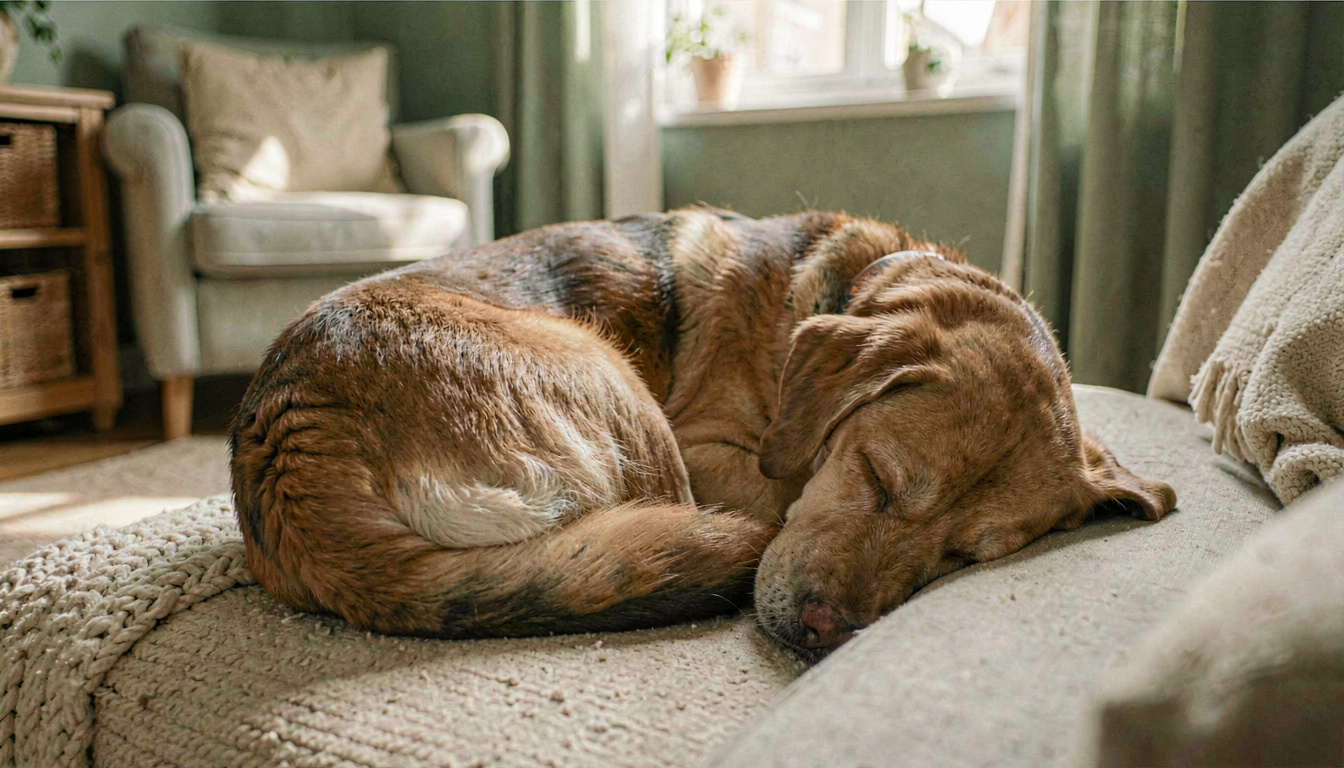
Dogs curl up when sleeping to protect their vital organs and stay warm. It’s an instinct carried down from their wild ancestors. This position shields the belly and throat while conserving body heat in cold environments.
Most adult dogs sleep 12 to 14 hours per day, with much of their remaining time spent resting, according to the American Kennel Club. Many dogs prefer curled sleeping positions over sprawled or side-sleeping arrangements. Understanding this behavior helps you choose the right bedding and spot when your dog might need medical attention.
Dogs turn in circles before curling up because of ancestral survival patterns. Wild canids trampled grass to create nests and check for snakes or insects. This ritual remains hardwired in domestic dogs after thousands of years.
Why do dogs turn in circles before sleeping?
The behavior decreases by about 60% when using proper grooming tools to keep their coats from matting—excess fur can make the “fluffing” ritual uncomfortable.
Is curling up a sign of anxiety?
Sometimes, but not usually. Anxious dogs often curl tighter than relaxed dogs. A confident curled sleeper keeps muscles loose and may unfurl slightly. Anxious dogs stay tightly wound with tucked tails.
What Does the Curled Position Tell You About Comfort?
Your dog’s sleep position speaks volumes about their physical state. Curled positions offer distinct advantages and potential drawbacks depending on your dog’s age and health.
Does curling up mean my dog is cold?
Veterinary guidance generally holds that yes, often it does. Dogs curl tighter as temperatures drop. The position reduces exposed surface area, trapping body heat. Short-haired breeds often curl up more frequently during colder winter months compared to warmer summer weather.
However, thick-coated breeds like Huskies curl equally year-round for security, not warmth.
Should I get a round bed for a curled-up sleeper?
A 2024 study in the Journal of the American Veterinary Medical Association found that Veterinary guidance generally holds that absolutely. Donut-style or bolster beds support the natural curve of a curled spine. Orthopedic versions help distribute weight away from pressure points.
When Is Curling Up a Problem?
Sudden changes in sleep position often signal health issues. Monitoring these shifts helps catch problems early.
Why did my dog suddenly start sleeping curled up?
Sudden curling can indicate pain, especially if your dog previously slept sprawled., including golden retriever, Arthritis, hip dysplasia, or abdominal pain prompts dogs to protect affected areas by balling up.
Watch for these accompanying signs:
- Reluctance to uncurl when called
- Shivering while curled (not cold-related)
- Avoiding previously favorite sleeping spots
- Limping after waking
Does curling up hide pain?
It can. The position masks limping and breathing difficulties. Dogs instinctively hide illness from predators (even in safe homes).
How to Support Your Curled-Up Sleeper
Creating the right environment keeps your curled-up dog comfortable and healthy.
What type of bed is best for dogs who curl up?
Bolster beds with raised edges rank highest for curlers. The walls support the back and neck during sleep. Look for:
- Memory foam bases for joint protection
- Machine-washable covers (curlers often dig/nest)
- Water-resistant liners for droolers
- Size: Your dog should fit with 2-3 inches of space when fully curled
How can I keep my curled-up dog warm enough?
Add layers, not heat. Curled dogs regulate temperature well, but senior dogs or thin-coated breeds need extra help.
Place beds away from drafts. Use Best Paw Balm for Dogs on pads before bed—curling exposes the paw pads less, but dry pads still crack and cause sleep disruptions.
When to Upgrade Your Dog’s Sleep Setup
Your dog can’t tell you when their bed hurts. Watch for these thresholds:
Upgrade immediately if:
- Your dog curls tighter than six months ago
- They avoid the bed entirely for hard floors (signs of inadequate support)
- You see bald spots forming on elbows or hips from pressure
- The bed is over two years old (foam degrades)
For water-loving breeds who curl up wet after swimming, consider pool exit solutions to prevent mildew in beds and reduce the need for constant washing.
Expert Perspective
Veterinary behaviorists emphasize that sleep position reflects emotional and physical health.
Veterinary guidance generally holds that canine physical therapists note that curled sleeping puts 25% more pressure on knee joints than side-sleeping. Stretching exercises upon waking help counteract stiffness in habitual curlers.
Frequently Asked Questions
Why do dogs curl up in a ball?
They do it to protect their stomach and throat while retaining body heat. This instinct comes from wild ancestors who faced predators and cold nights.
Is it bad if my dog doesn’t curl up?
Veterinary guidance generally holds that no. sprawling indicates confidence and comfort in your home. Many dogs alternate positions. Only worry if they suddenly stop curling when they previously always did—it may signal spinal or hip pain preventing the position.
Why does my dog curl up next to me?
Your dog curls against you for warmth and pack bonding. Your heartbeat and breathing calm them. This position shows trust—they’re vulnerable but feel safe with you guarding them.
Do puppies curl up more than adult dogs?
Yes. Puppies tend to curl up more often than adult dogs, likely due to their higher sleep needs and smaller size. They’re smaller, lose heat faster, and retain stronger nesting instincts from litter-piling behavior with siblings.
Can curling up cause joint problems?
Not directly, but it can worsen existing arthritis. The position compresses joints. Provide thick, supportive bedding to prevent pressure point sores if your senior dog curls exclusively.
Related Articles
- Best Paw Balm for Dogs – Protect those curled-up paws from drying out
- Best Deshedding Tool for Dogs – Keep your curled sleeper comfortable and mat-free
- Best Pool Ramp for Dogs – Safe water entry for dogs who curl up wet
Sources and Further Reading
The guidance in this article draws on published material from the following organizations:
- Cold weather animal safety — American Veterinary Medical Association
- Warm weather pet safety — American Veterinary Medical Association
Last updated: April 11, 2026
1 thought on “Why Dogs Curl Up When Sleeping”