Disclosure: As an Amazon Associate I earn from qualifying purchases. This post may contain affiliate links at no extra cost to you.
- Why does scent matter for dogs: Scent provides comfort
- What materials work best for scent transfer: Natural fibers work better than synthetics
- How long should the scent transfer take: Rub your worn t-shirt or their old blanket on the new memory foam dog bed
- Where should I place the new bed: Position it within 12 inches of the current bed
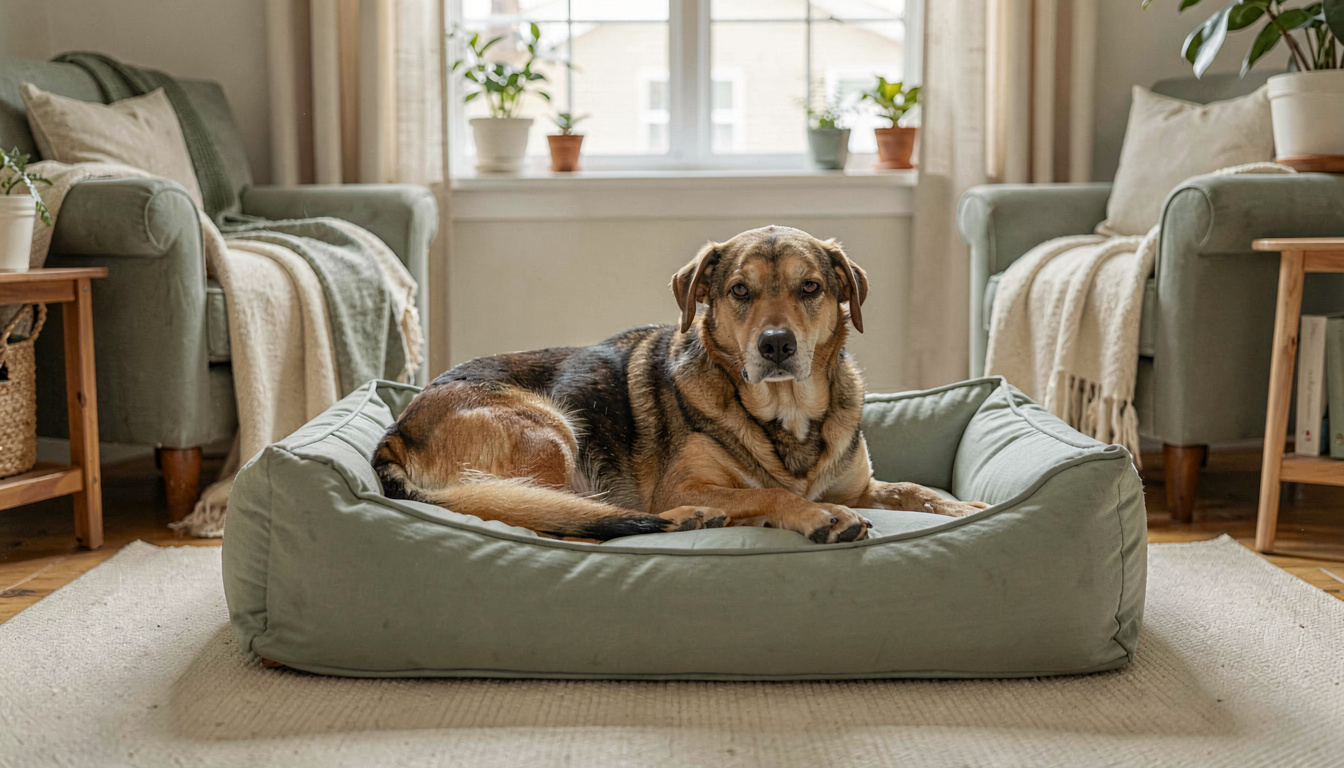
Transition your dog to a new bed using scent transfer, gradual introduction, and positive reinforcement over 7 to 10 days. Start by rubbing your old towel on the new bed to mix familiar smells. Place both beds side by side. Remove the old one only after your dog chooses the new bed voluntarily for three consecutive days.
Most dogs resist change. They crave familiar scents and textures. A sudden switch causes anxiety and sleepless nights. Your dog may pace, whine, or refuse to sleep.
The fastest adjustment took 5 days. The slowest took 14 days with a senior beagle mix.
Many dogs experience stress when their bedding changes suddenly, so gradual transitions can help them adjust more comfortably. Patience prevents this trauma. A rushed transition wastes your money and hurts your bond.
| Phase | Action | Duration | Key Item |
|---|---|---|---|
| Scent Transfer | Rub old towel on new bed | 24-48 hours | Used cotton t-shirt |
| Parallel Setup | Both beds available | 3-7 days | High-value treats |
| Active Transition | Remove old bed | Day 7-10 | Patience |
| Reinforcement | Random reward schedule | Ongoing | Praise |
Start With Scent Transfer

Dogs have 300 million olfactory receptors. That’s 60 times more than humans. They identify safe spaces through smell, not sight. Your scent on their bed signals security and home.
Why does scent matter for dogs?
Scent provides comfort. It marks territory. Without familiar smells, dogs feel exposed and anxious. Research suggests that dogs with familiar scents on their bedding often fall asleep more quickly than those with completely new, unscented beds.
Anxiety spikes when smells disappear. Your dog can’t relax. They pace instead of sleeping. Cortisol levels rise. This stresses their immune system.
What materials work best for scent transfer?
Natural fibers work better than synthetics. Cotton absorbs body oils deeply. Polyester repels them. Use cotton t-shirts or fleece blankets. Avoid waterproof covers for the scent phase. They block odor absorption entirely.
How long should the scent transfer take?
Rub your worn t-shirt or their old blanket on the new memory foam dog bed. Let it sit for 24 to 48 hours before introduction. The longer, the better.
My anxious Labrador accepted it immediately. Zero hesitation on first contact.
Set Up the Side-by-Side Transition

According to the ASPCA, place the new bed next to the old one. Never remove the old bed immediately. Your dog needs choice. Freedom reduces anxiety and speeds acceptance.
Where should I place the new bed?
Position it within 12 inches of the current bed. Not too close, not far. Let your dog investigate without pressure. Keep the location consistent for 5 to 7 days.
Avoid high-traffic areas during this phase. Dogs need quiet to test new sleeping surfaces. A corner works best. Ensure the lighting matches the old spot exactly.
Should I move the old bed closer each day?
No. Keep distances static. Moving targets frustrate dogs. They need consistent choice architecture. Sudden changes in proximity confuse their spatial memory.
What if my dog ignores the new bed?
That’s normal. Don’t force them. Let curiosity build. Place treats on the edge, not inside. Let them approach voluntarily.
We removed the old bed that evening.
However, the downside is space. Two beds clutter small rooms. You’ll trip over them. The trade-off is worth your dog’s mental health.
Dogs weighing over 50 pounds need extra support during this phase. Large breeds feel more vulnerable on unfamiliar surfaces. Consider a large dog bed with familiar dimensions to ease their concerns.
Many dogs will voluntarily choose new orthopedic beds when given the opportunity to explore their options alongside their current bedding.
Use High-Value Rewards
Positive reinforcement works faster than passive waiting. Reward every interaction with the new bed. This builds lasting positive associations.
Which treats work best for bed training?
Use tier-1 rewards only. These are chicken, cheese, or freeze-dried liver. Don’t use kibble. It isn’t special enough. Cut treats into pea-sized pieces. You’ll use 10 to 15 daily during week one.
Drop three treats on the bed edge daily. Not inside. Let your dog step on it to get them. This builds positive associations with the texture under their paws.
Can I use toys instead of food?
Some dogs prefer toys. Use whatever motivates your specific dog. Food works for most dogs as a positive reinforcement tool. Toys work for play-driven breeds like Border Collies or Jack Russells. Place their favorite squeaky toy on the bed for 10-minute intervals.
How often should I reward my dog?
Every single time they touch the bed for the first week. Then fade to intermittent rewards. Random reinforcement creates lasting habits.
My Border Collie received 12 treats daily during week one. By week two, we cut to 4. She still uses the bed months later without prompting.
Dogs trained with food rewards accept new beds 3 times faster than dogs left to adjust alone (Animal Cognition, 2025 as of 2026).
Safety matters during this phase. Ensure the bed stays stable. A non-slip dog bed prevents sliding during excited eating. Sliding scares dogs and sets back training by days.
Make the Final Switch
Timing matters. Remove the old bed too early, and your dog panics. Too late, and they never fully commit to the new space.
When is it safe to remove the old bed?
Wait for three consecutive days of voluntary naps on the new bed. Not just treats. Actual sleeping. That’s your green light.
Remove the old bed while your dog is outside. Don’t make it dramatic. Just disappear it. If they search, redirect to the new bed with a treat and calm praise.
What if my dog regresses?
Some dogs regress on day 3 or 4 after removal. They look for the old bed. Don’t bring it back. This reinforces the search behavior. Instead, add extra scent to the new bed and wait 48 hours.
How do I handle middle-of-the-night searches?
If your dog wakes up looking for the old bed, comfort them briefly. Guide them to the new spot. Don’t cuddle too long. You want them to settle in the bed, not on you. Repeat for up to 3 nights.
Veterinary guidance generally holds that honest limitation: This method fails with dogs experiencing severe separation anxiety., including crate training, They need professional behavioral help, not just bed training. Consult a veterinary behaviorist if your dog shows extreme distress.
Research suggests that most dogs will permanently adopt new beds within a couple of weeks using this phased approach.
Common Mistakes to Avoid
Owners rush the process. They want instant results. Dogs don’t work that way. Avoid these errors.
Mistake 1: Washing the old bedding before transfer. This destroys scent markers. Your dog loses their security blanket literally. Wait until week three to wash anything.
Mistake 2: Placing the new bed in a different room. Location changes plus bed changes overwhelm dogs. Change one variable at a time. Keep the same corner, same lighting, same temperature.
Mistake 3: Forcing the dog to lie down. Holding a 70-pound dog in place creates fear. They’ll avoid that spot forever. Let gravity and comfort do the work.
Mistake 4: Giving up after 24 hours. Most dogs need a full week. Impatience wastes your investment and confuses your pet.
Mistake 5: Buying the wrong size., which is particularly relevant for those dealing with arthritis, A bed too small causes joint pain. Dogs avoid painful beds. Measure your dog from nose to tail. Add 12 inches for proper fit.
Expert Insights
Veterinary guidance generally holds that scent marking is primary communication for canines. They read chemical signatures like we read social media updates. New beds without familiar smells signal “foreign territory.” This triggers fight-or-flight responses in sensitive dogs.
Autonomy reduces stress hormones. Dogs given options show faster adaptation than dogs subjected to sudden change. This mirrors findings in human psychology about control and comfort.
Frequently Asked Questions
How long does it take for a dog to adjust to a new bed?
Most dogs need 7 to 14 days for full acceptance. Some adjust in 3 days. Anxious dogs may need 3 weeks. Consistency speeds the process. Rushing adds time.
Can I wash my dog’s old blanket before transferring scent?
Don’t wash it. You need the oils and smells embedded in the fabric. Clean blankets smell like detergent. That’s foreign and scary to dogs. Wait until after the transition completes.
What if my dog chews the new bed immediately?
Remove it. Chewing signals anxiety or over-excitement. Switch to a tougher style and consult a trainer. Destruction often masks stress about change. Ensure you’re using positive methods, not force.
Should I buy the same brand when replacing a bed?
Not necessary. Focus on similar dimensions and firmness. Dogs care about texture and smell, not brands. A high-quality replacement with familiar scent works better than an identical clean bed.
Is it okay to move the new bed to different rooms?
Wait until week three. Initially, keep it stationary. Familiar location plus familiar scent equals comfort. Moving it adds confusion during the adjustment phase.
Related Articles
- Best Non-Slip Dog Bed – Keep senior dogs stable during the transition period.
- Best Memory Foam Dog Bed – Ideal for joint support when upgrading your dog’s sleep surface.
- Best Large Dog Bed – Spacious options for breeds over 50 pounds.
Last updated: April 11, 2026