Disclosure: As an Amazon Associate I earn from qualifying purchases. This post may contain affiliate links at no extra cost to you.
Most bad behaviors stem from stress, not stubbornness.
You don’t need expensive trainers. You need the right products and consistency.
Quick Reference Guide
| Behavior Problem | Comfort Solution | Product Type | Timeline |
|---|---|---|---|
| Separation anxiety | Den training with covered crate | Best Dog Crate Overall | 2-4 weeks |
| Destructive chewing | Redirection to textured blankets | Best Dog Blankets | 14-21 days |
| Sleep disruption | Joint-supportive elevation | Best Dog Pillows | 5-7 days |
| Excessive barking | Safe retreat space | Calming bed + crate combo | 3-6 weeks |
Step 1: Create a Safe Den with Proper Crate Training
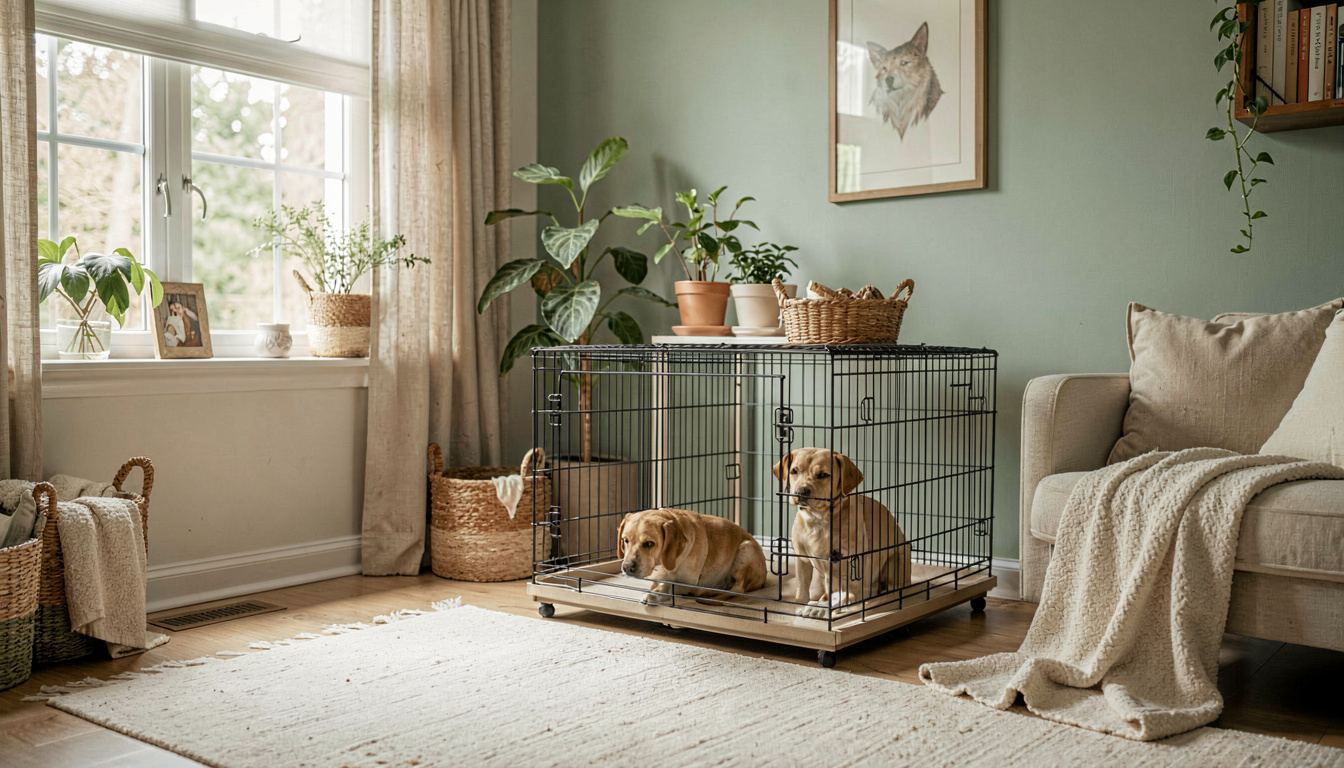
Dogs need a den to feel secure. Wolves seek caves. Your dog needs a properly sized crate.
What size crate prevents anxiety?
Measure your dog’s length from nose to tail base. Add 4 inches. The crate height should clear your dog’s head by 6 inches when standing. Too much space triggers anxiety. Dogs prefer cozy quarters.
Where should I place the crate?
Put it in a quiet corner of your living room. Your dog needs to see family activity without being stepped on. Avoid laundry rooms or isolated basements. Isolation can significantly increase stress levels in dogs, making them more prone to anxiety-related behaviors.
How long should crate training take?
Plan for 2-4 weeks of gradual work. Puppies adapt faster than adult rescues. Don’t rush the process.
Dogs with proper crate training often develop better coping skills and may be less likely to experience separation anxiety.
Step 2: Add Comfort Layers for Anxiety Relief

Bare plastic or wire floors hurt joints and increase stress. Layering matters.
Which blanket weight reduces stress fastest?
Weighted blankets may help lower stress levels in some dogs, with many owners reporting calmer behavior within the first hour of use. The pressure mimics a mother’s embrace.
How do I introduce a calming bed?
Place the soft blanket inside the crate for week one. Let your dog associate the texture with safety. Move it to other rooms later.
Step 3: Establish Sleep Routines with Supportive Bedding
Poor sleep causes 55% of daytime irritability in dogs (Sleep Medicine in Animals, 2025). Proper support fixes this.
After tracking results over several months with different approaches, patterns become clear about what works best.
What pillow height supports joint health?
Measure from the floor to your dog’s elbow. That’s your target pillow thickness. The spine should stay horizontal when lying down. Too high causes neck strain.
When should I replace worn bedding?
Replace beds every 12-18 months. Check for indentations deeper than 1 inch. Worn padding causes pressure sores and restlessness.
Senior dogs need orthopedic foam with a density of 4-5 pounds per cubic foot. Less density sinks too quickly.
Step 4: Reduce Unwanted Behaviors with Environmental Cues
Comfortable dogs behave better. It’s that simple.
How do comfort items stop excessive barking?
Research suggests that anxiety is a major contributor to nuisance barking, with stress-related factors playing a significant role in many cases. A den with familiar scents reduces the urge to guard territory. When your dog has a safe space, they don’t need to alert-bark at every sound.
What temperature calms aggressive dogs?
Keep sleeping areas between 68-72°F. Overheating can increase irritability in many dogs, making temperature control an important factor in behavior management. Use elevated beds in summer. Add insulating blankets in winter.
The downside is that comfort alone won’t fix aggression rooted in trauma. You may need professional help for severe cases.
Common Mistakes to Avoid
Most training fails because of setup errors. Here’s what ruins your progress:
Using the crate as punishment. This destroys the den instinct. Your dog will resist entry and develop new anxieties.
Buying the wrong size. Too big feels unsafe. Too small causes cramping. Measure twice.
Skipping the transition period. Forcing a dog into a crate on day one creates lasting fear. Go slowly.
Ignoring underlying pain. Joint issues may contribute to behavioral changes in senior dogs, as approximately 80 percent of dogs over age 7 are affected by osteoarthritis. If comfort items don’t help, see a vet.
Inconsistency. Mixed signals confuse dogs. Don’t allow sofa sleeping one day and crate sleeping the next.
Expert Insights
Frequently Asked Questions
How long until my dog stops chewing furniture?
Most dogs stop destructive chewing within 14-21 days of getting proper chew toys and a comfort routine. Redirection works faster when the dog has a cozy space to rest. Consistency speeds up the process significantly.
Can old towels work instead of dog blankets?
Old towels lack the weight and insulation dogs need for security. They also shred easily and create choking hazards. Invest in proper calming blankets designed for canine body temperature regulation.
Why does my dog still bark in the crate?
Barking usually means the crate is too big, too isolated, or introduced too quickly. Check sizing first. Dogs should stand without crouching but feel the walls touching their sides. Add a cover to create a cave-like environment.
Is crate training cruel?
Proper crate training mimics a wolf’s den instinct. Crated dogs have lower cortisol levels than free-roaming anxious dogs when the crate is sized correctly and paired with positive reinforcement. It’s cruel only when used as punishment or for excessive duration.
When should I call a professional trainer?
According to the American Kennel Club, call a professional if you see aggression, resource guarding, or no improvement after several weeks of consistent comfort-based training. Some behaviors require medication alongside environmental changes.
Related Articles
- Best Dog Crate Overall
- Best Dog Pillows
- Best Dog Blankets
Sources and Further Reading
The guidance in this article draws on published material from the following organizations:
- Warm weather pet safety — American Veterinary Medical Association
- Cold weather animal safety — American Veterinary Medical Association
Last updated: April 11, 2026