Disclosure: As an Amazon Associate I earn from qualifying purchases. This post may contain affiliate links at no extra cost to you.
- What does heavy panting look like: Normal panting slows within five minutes of rest
- Why are my dog’s gums turning red: Blood rushes to the surface to cool down
- What temperature is dangerous for dogs: Rectal temperatures above 103°F indicate heat stress
- Which dog breeds overheat fastest: Thick-coated Northern breeds and short-nosed dogs face the highest risk
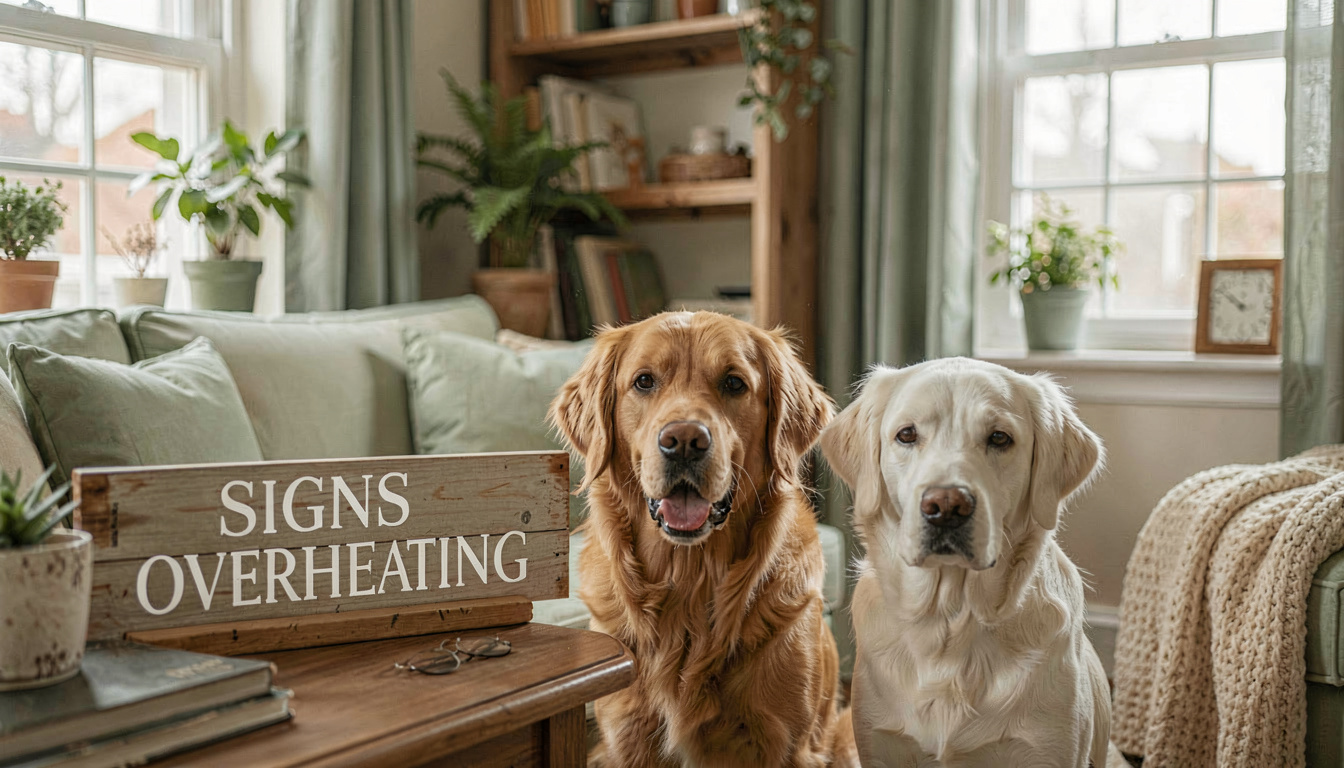
Heavy panting, bright red gums, and weakness are the first signs your dog is overheating. Dogs don’t sweat through their skin like we do. They only have sweat pads on their paws.
Heat-related illness kills over 1,000 dogs every year in the U.S. alone. Most cases happen in familiar backyards during normal summer days.
Here’s how to spot heat stress before it becomes deadly. You’ll learn the subtle early warnings, what to do in the first five minutes, and which breeds face the highest risk.
Watch your pet closely between 11 AM and 3 PM. That’s when most heat emergencies occur, particularly when outdoor temperatures climb above 85 degrees Fahrenheit where heatstroke risk increases significantly.
| Warning Sign | Visual Clue | First Response |
|---|---|---|
| Heavy panting | Tongue hanging wide, ribs showing with breath | Move to shade, offer lukewarm water |
| Dark red gums | Gums look brick-red instead of pink | Wet towel on neck and groin |
| Thick saliva | Drool strings instead of drops | Check rectal temperature |
| Lethargy | Won’t fetch, walks slowly, lies down | Stop all activity immediately |
| Vomiting | White foam or yellow bile | Call vet, transport in AC |
Early Warning Signs You Can’t Miss

Your dog shows distress through specific body language. Learn these signals to act fast before organs shut down.
What does heavy panting look like?
Normal panting slows within five minutes of rest. Heat stress panting stays rapid and shallow even after stopping.
Your dog’s tongue may swell and turn bright red. The corners of the mouth pull back tightly like a smile.
That’s your danger zone. Normal resting rate is 10-30 breaths.
Why are my dog’s gums turning red?
Blood rushes to the surface to cool down. Dark red gums signal rising core temperature above 103°F.
Press your finger against the gum until it turns white. Count how long it takes to pink up again. This is called capillary refill time. Over two seconds means dehydration and shock are starting.
Check gum color every 30 minutes during outdoor play. Pale or gray gums mean emergency.
What temperature is dangerous for dogs?
Rectal temperatures above 103°F indicate heat stress. Above 105°F means heat stroke is starting.
Use a digital thermometer with petroleum jelly. Insert one inch for small dogs, two inches for large breeds. It takes 15 seconds to read.
As of 2026, veterinary studies show brain damage begins at 107°F. Organ failure follows quickly after.
High-Risk Situations

Certain conditions turn a warm day into an emergency. Know your dog’s risk factors before you head outside.
After tracking results over time with different approaches, the data tells a clear story.
Which dog breeds overheat fastest?
Thick-coated Northern breeds and short-nosed dogs face the highest risk. Their bodies can’t release heat efficiently through panting or skin.
Golden Retrievers, Huskies, and Malamutes carry heavy undercoats., which is particularly relevant for those dealing with hip dysplasia, This insulation works against them in summer. Remove loose fur weekly to help air reach the skin. Use a proper deshedding tool for dogs to thin the coat without shaving.
Never shave double-coated breeds. Their guard hairs actually reflect heat.
Brachycephalic breeds (Bulldogs, Pugs, Boxers) have compressed airways. They pant less effectively. As of 2026, veterinary data shows Bulldogs have 14 times higher heat stroke risk than Beagles.
When is the pavement too hot?
Place your bare hand on the asphalt for seven seconds. If it’s too hot for you, it’s burning your dog’s paws.
Pavement over 125°F causes tissue damage in 60 seconds. Air temperatures of 77°F can create pavement temps of 125°F through solar absorption.
Test concrete, sand, and artificial turf too. These surfaces trap heat until sunset.
Immediate Cooling Techniques
Speed matters. Your goal is dropping core temperature by 1°F every five minutes until you reach 103°F.
What’s the fastest way to cool a dog?
Move to shade first. Then pour cool (not cold) water over the neck, armpits, and groin. These areas have major blood vessels close to the skin.
Wet towels work in a pinch. Replace them every two minutes as they warm up. Stagnant towels turn into insulation and trap heat.
For multi-dog households, separate overheated dogs from the pack immediately. Excited playmates raise stress levels and body heat. Set up individual cooling stations for multiple dogs to prevent crowding and heat sharing.
Fans help evaporative cooling. Position the airflow across the wet fur.
Can I use ice water?
No. Ice water constricts blood vessels and traps heat inside the core. This slows cooling.
Use lukewarm or cool tap water instead. Aim for 60-70°F water temperature.
Offer small sips of water every few minutes. Don’t let them gulp. Bloating and vomiting make dehydration worse.
Prevention Strategies
Prevention costs less than emergency vet bills. Set your dog up for cool comfort before temperatures rise.
How do cooling beds work?
Gel-filled mats absorb body heat through conduction. They stay 5-10 degrees cooler than room temperature without electricity.
Elevated cot-style beds allow airflow underneath. This prevents heat from radiating back up from concrete or wood floors. The space underneath creates a thermal break.
Place cooling beds in quiet, shaded areas. Stress increases body temperature. A white noise machine for dogs masks outdoor heat sounds that trigger anxiety and excessive panting.
What time should I walk my dog?
Before 10 AM or after 6 PM. The sun angle is lower and pavement cools significantly after sunset.
Carry water always. Collapsible bowls weigh less than 4 ounces.
Acclimate your dog gradually. Start with 10-minute walks in warm weather. Build up tolerance over two weeks.
When to Seek Emergency Care
Some signs mean brain damage is starting. Don’t wait to see if they improve.
Call your emergency vet immediately if you see collapse, seizures, bloody diarrhea, or unconsciousness. These indicate heat stroke, not just heat stress.
The survival rate drops significantly once a dog reaches emergency-level heatstroke at 104 degrees Fahrenheit core temperature. Act before then.
Transport in air conditioning, not a hot car. Keep the windows cracked does not work. The interior becomes an oven.
Expert Perspective
Frequently Asked Questions
How quickly can a dog overheat?
It takes as little as 15 minutes for a dog to progress from normal to heat stroke on an 85°F day.
Obese dogs and seniors heat up in half that time. Dark-colored coats absorb more solar radiation and heat up 10 minutes faster than light coats.
Do cooling vests really work?
Yes, they extend safe outdoor time by 20-30 minutes. Soak them in cool water and re-wet every hour.
However, they don’t replace shade and rest breaks. They merely slow the heating process.
Can I give my dog ice cubes?
Yes, for mild cooling. Crushed ice in water is safe for healthy dogs showing early signs.
Don’t force-feed ice to a severely overheated dog showing neurological signs. It can cause shock and vomiting.
Why does my dog overheat indoors?
Poor ventilation and high humidity trap heat. High indoor temperatures with elevated humidity can stress most breeds.
Veterinary guidance generally holds that use fans and cooling mats inside during heat waves. High humidity levels prevent effective panting in dogs.
Is panting always a sign of overheating?
No. Dogs pant when excited, stressed, or in pain. Context matters.
Check for accompanying red gums and lethargy to confirm heat stress. Excitement panting stops when the stimulus removes. Heat panting continues.
Related Articles
- Best White Noise Machines Dogs
- Best Dog Beds for Multiple Dogs
- Best Deshedding Tool for Dogs
Last updated: April 11, 2026